
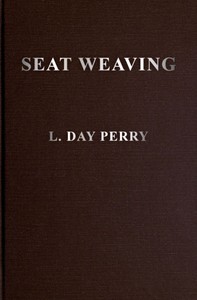
Seat Weaving by L. Day Perry
Let's be clear from the start: 'Seat Weaving' is not a novel. Published in 1917, it's a practical instruction manual. L. Day Perry walks you through the entire process of re-weaving chair seats using three main materials: cane, rush (made from paper fibre), and splint (often hickory or oak). The book is methodical. It starts with the tools you'll need—a simple list of awls, pegs, and cutters—and then dives into the techniques for each material.
The Story
There's no protagonist in the traditional sense, unless you count the chair itself. The 'plot' is the transformation of a broken-down seat into something functional and handsome. Perry lays out each step with clear, no-nonsense instructions and helpful diagrams. You learn how to start the weave, how to maintain proper tension (the key to a long-lasting seat!), and how to finish it off neatly. The story it tells is one of patience and skill. It assumes a reader who is willing to learn a hands-on craft, someone who finds satisfaction in fixing what is broken with their own two hands.
Why You Should Read It
I picked this up out of sheer curiosity, and I'm so glad I did. Reading it feels like a direct conversation with the past. Perry's voice is confident and encouraging, the voice of a true expert who wants to share their knowledge. Beyond the specific craft, the book captures a mindset. It's a snapshot of a time when repairing household items was a common skill, not a lost art. There's a quiet pride in the work that I find really moving. It makes you look at every antique chair in a new way, appreciating the human effort woven into its seat. It’s a small, powerful reminder of the connection between our hands and our homes.
Final Verdict
This book is a niche gem, but a brilliant one. It's perfect for history lovers, DIY enthusiasts, antique restorers, or anyone with a curiosity about material culture. If you enjoy the 'how-to' sections of old farmer's almanacs or the detailed catalogs of early 20th-century life, you'll be fascinated. It's also a wonderful resource for anyone actually looking to take up seat weaving—the instructions are timeless. Think of it less as a book you read for plot, and more as a tool and a time capsule. You come away from it not just knowing how to weave a chair, but feeling like you've shaken hands with a very capable, thoughtful craftsperson from 1917.
Legal analysis indicates this work is in the public domain. Distribute this work to help spread literacy.
Jessica Johnson
9 months agoThe layout of the digital version made it easy to start immediately, the formatting on mobile devices is surprisingly crisp and clear. It definitely lives up to the reputation of the publisher.
Kevin Robinson
1 year agoFinally found time to read this!
David Perez
2 years agoVery helpful, thanks.







Elizabeth Hernandez
1 year agoI've gone through the entire material twice now, and the historical context mentioned in the early chapters is quite enlightening. A trustworthy resource that I'll keep in my digital library.