
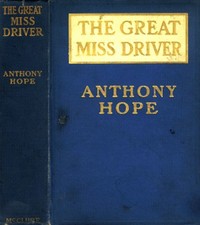
The Great Miss Driver by Anthony Hope
Published in 1908, Anthony Hope's The Great Miss Driver feels ahead of its time. It’s not a swashbuckling adventure like his famous The Prisoner of Zenda; instead, it’s a sharp, character-driven novel about power, ambition, and the price of success.
The Story
When Eleanor 'Nell' Driver suddenly becomes the wealthy heir to the vast Driver estate of Breysgate, she doesn't just want to be a rich socialite. She wants to be a force. The story is told through the eyes of her loyal, but often conflicted, solicitor and friend, Austin. We watch as Nell uses her intelligence, charm, and sometimes underhanded tactics to expand her influence. She gets involved in local politics, business ventures, and high-stakes social maneuvering. She gathers a circle of admirers and allies, but her relentless drive to control everything and everyone around her creates tension. The plot thickens with romantic entanglements and power struggles, all leading to a point where Nell must confront the consequences of her actions and decide what truly matters to her.
Why You Should Read It
For me, the magic of this book is all in Nell. She’s a brilliant, frustrating, and utterly captivating character. Hope doesn't make her a saint or a villain; he lets her be gloriously human and flawed. You’ll admire her guts and intelligence one minute, and wince at her cold calculations the next. It’s a fantastic exploration of what happens when a woman with a sharp mind is handed the keys to the kingdom in a man’s world. The writing is crisp and witty, and seeing the world through Austin’s perspective adds a great layer—you’re constantly comparing his view of Nell with her own actions.
Final Verdict
This is a perfect pick for readers who love a strong, complicated protagonist. If you enjoy books where the central mystery is the main character's own soul, you’ll be hooked. It’s also a great find for anyone interested in early 20th-century stories that challenge traditional gender roles without being preachy. While it’s over a century old, the questions it asks about ambition, ethics, and legacy feel completely fresh. Give it a try if you’re in the mood for something a little different from the typical period drama.
There are no legal restrictions on this material. Knowledge should be free and accessible.
Nancy Martinez
1 year agoHaving read the author's previous works, the clarity of the writing makes even the most dense sections readable. Well worth the time invested in reading it.




David Gonzalez
6 months agoI started reading this with a critical mind, the narrative arc keeps the reader engaged while delivering factual content. Top-tier content that deserves more recognition.