Royal Railways with Uniform Rates by Whately C. Arnold
Let's be clear from the start: this isn't a bedtime story. Royal Railways with Uniform Rates is a 19th-century policy proposal dressed in a book's clothing. Published in 1898, it's author Whately C. Arnold's full-throated case for a radical idea: the British government should take over every private railway in the country.
The Story
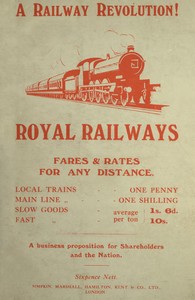
There's no plot in the traditional sense. Instead, Arnold lays out his argument like a lawyer (which he was). He paints a picture of the late-Victorian railway network as a messy, inefficient jungle. Dozens of companies operated their own lines with their own complicated, overlapping fare systems. Arnold saw this as wasteful, confusing for passengers, and bad for business. His solution was breathtakingly simple: one publicly owned company, 'Royal Railways,' running everything. One set of tracks, one management, and most importantly, one uniform rate for travel anywhere in the system, calculated purely by distance. He spends pages detailing how it would work, how to pay for it (by issuing government bonds to buy out the shareholders), and why it would boost trade, help the poor, and streamline the entire nation's transport.
Why You Should Read It
Reading this today is a strange experience. You're watching the blueprint for a 20th-century political battle being drawn up in the language of the 19th. Arnold isn't a fiery socialist; he's a pragmatic reformer making a case for efficiency and common sense. His belief that a single, rational system run by the state would be better than capitalist competition feels both quaint and prescient. What grabs me is the sheer confidence of his vision. He tackles every possible objection—from the cost to the fate of railway workers—with unwavering certainty. It's less about characters and more about character: the mind of a man who looked at the complex world around him and believed it could be made orderly and fair through a single, sweeping change.
Final Verdict
This book is a niche pick, but a rewarding one. It's perfect for history buffs, policy wonks, or anyone interested in the roots of nationalization. It's also great for readers who enjoy primary sources—this is the argument itself, not a historian's summary of it. If you prefer novels with gripping plots, you'll find this tough going. But if you've ever wondered how big ideas like public ownership first found their voice, this is a fascinating and direct line back to one of their early, most detailed champions. Think of it as a historical document with a persuasive heartbeat.
This title is part of the public domain archive. It is now common property for all to enjoy.