About 168 minutes
Mary Jane's City Home — Inside the Classic
Fantasy Juvenile Worlds
38,598 recorded words. 14 minutes difference from this book's estimate.
View Gutenberg source #26517
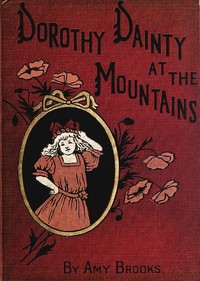
The catalog record for Dorothy Dainty at the Mountains — Text and Context provides practical reading context through 35,412 words, 2 hr 34 min estimated reading time, and 6 detected text sections.
The text analysis averages about 15.9 words per sentence, while the detected sections provide another way to judge how the source is divided.
Project Gutenberg metadata also associates the work with “Friendship -- Juvenile fiction,” connecting these edition facts with the source record’s subject description.
Explore this collection
These alternatives are selected using recorded categories and estimated reading time.
About 168 minutes
Fantasy Juvenile Worlds
38,598 recorded words. 14 minutes difference from this book's estimate.
View Gutenberg source #26517About 169 minutes
Fantasy Juvenile Worlds
38,667 recorded words. 15 minutes difference from this book's estimate.
View Gutenberg source #36880About 137 minutes
Fantasy Juvenile Worlds
31,420 recorded words. 17 minutes difference from this book's estimate.
View Gutenberg source #24911Search stored excerpts and compare books → Choose by your preferences →
Choices use stored catalog measurements. Estimates vary with reading speed. A shared category is a catalog label, not a claim that two books have the same argument or literary quality.
Search reads excerpt text stored with this catalog and links to its associated Gutenberg record. The connection is stored in the site database; this tool does not recheck that every excerpt is word-for-word identical to that external record. Excerpt search does not cover every chapter and does not verify historical publication dates.
Catalog snapshot checked: 2026-09-26. Coverage: 99 public books, 99 available source excerpts.
Calculated from edition completeness, EPUB availability, text structure and catalogue metadata. Not a user rating.
Total of 100 points, scaled to a 2.5-5.0 range. Editions with an empty description or a missing EPUB file are not scored.
Public-domain source text
The source text is kept in the dedicated reader, separate from this catalogue record and its commentary.
From its opening sentence, Dorothy Dainty at the Mountains establishes a landscape that responds to human presence. The great hotel on the crest of the hill is bathed in sunlight that pours from a rift in the clouds, as if sent for the sole purpose of showing the grand portico. The personification continues: the many windows seem to be looking across the valley, and the wide doorway smiles genially. This is not mere decoration; it sets a pattern where the natural and built environments mirror or echo the characters' emotions and actions.
The frontispiece caption—"Here! Here!" cried Dorothy, and echo answered, "Here,—ere!"—announces a central device. Echoes recur not only as sound but as a structural principle: scenes often double or reflect one another. The hotel's windows "looking" across the valley anticipate the later moment when characters look back over the road they have traveled. The echo motif appears again in the chapter titled "The Echo Captured," suggesting that the narrative itself is built on catching and repeating moments. Brooks uses this to create a sense of continuity between the mountain setting and the girls' experiences, making the landscape an active participant in the story.
The excerpts show a deliberate rhythm of movement: from the hotel piazza to the law, then to the barge ride, and finally to the fairgrounds. Each transition is marked by a change in sensory detail—sunlight on the portico gives way to the open road, then to the tented fair. The barge ride itself becomes a mobile space where Uncle Harry's jokes and songs create a temporary community. Brooks pays careful attention to thresholds: the hotel doorway, the evergreen arch at the fair, the fortune teller's booth. These boundaries are not barriers but invitations, and the characters cross them with evident pleasure, reinforcing the book's emphasis on sociability and discovery.
Brooks frequently uses mirrors, glances, and returned looks. In one illustration, a character takes tripping steps, smiling at her reflection. The text describes Uncle Harry's blue tie and fine eyes, noting that no one could glance at him without knowing his nature. This emphasis on seeing and being seen extends to the landscape: the hotel's windows "look" across the valley, and the girls often look back as they speed over the road. The fortune teller's booth at the fair adds a layer of self-reflection, as characters have their fortunes told—a form of seeing the future. These moments suggest that identity in this world is partly constructed through the gaze of others and the environment.
The fair chapter explicitly contrasts city and country fairs, noting that the novelty of the mountain village fair gives greater interest. Farmers' daughters sell homemade candy and honey, while city fairs feature fashionable matrons. This juxtaposition is typical of Brooks's method: she sets up a binary—city/country, indoors/outdoors, echo/source—only to blur it. The fair becomes a space where these opposites coexist, much like the hotel that is both a grand building and a welcoming home. The evergreen arch, a natural structure, marks the entrance to a man-made tent, blending the two realms. This careful orchestration of contrasts gives the book a layered texture beneath its light surface.
Readers attentive to Brooks's use of echo and reflection will find a consistent pattern that rewards close attention. The movement between scenes is not arbitrary but follows a logic of contrast and repetition. While the excerpts offer only a partial view, they suggest a work that uses its mountain setting as more than backdrop—it is a mirror for the characters' own sociability and wonder. This note encourages looking for how each new location reconfigures the relationships established in the previous one.
There’s a quiet echo in Dorothy Dainty at the Mountains—the way the landscape repeats itself, soft and persistent, until you start hearing your own thoughts inside it. I kept remembering that feeling afterward. There’s something in The Story of a Cat — Reading Notes that lingers the same way, not loud, just present, like a shadow you’ve grown fond of without meaning to.
A brief reflection can help important ideas stay with you longer.