About 75 minutes
The Story of a Cat — Reading Notes
Fantasy Juvenile Worlds
17,108 recorded words. 2 minutes difference from this book's estimate.
View Gutenberg source #27472
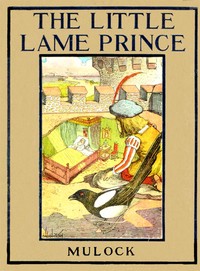
For The Little Lame Prince Rewritten for Young Readers by Margaret Waters — Story, Setting & Ideas, the stored edition analysis reports 17,541 words, 1 hr 17 min estimated reading time, and 3 detected text sections.
The text analysis averages about 18.2 words per sentence, while the detected sections provide another way to judge how the source is divided.
Project Gutenberg metadata also associates the work with “Fairy tales,” connecting these edition facts with the source record’s subject description.
Explore this collection
These alternatives are selected using recorded categories and estimated reading time.
About 75 minutes
Fantasy Juvenile Worlds
17,108 recorded words. 2 minutes difference from this book's estimate.
View Gutenberg source #27472About 66 minutes
Fantasy Juvenile Worlds
15,176 recorded words. 11 minutes difference from this book's estimate.
View Gutenberg source #33667About 60 minutes
Fantasy Juvenile Worlds
13,735 recorded words. 17 minutes difference from this book's estimate.
View Gutenberg source #37807Search stored excerpts and compare books → Choose by your preferences →
Choices use stored catalog measurements. Estimates vary with reading speed. A shared category is a catalog label, not a claim that two books have the same argument or literary quality.
Search reads excerpt text stored with this catalog and links to its associated Gutenberg record. The connection is stored in the site database; this tool does not recheck that every excerpt is word-for-word identical to that external record. Excerpt search does not cover every chapter and does not verify historical publication dates.
Catalog snapshot checked: 2026-09-26. Coverage: 99 public books, 99 available source excerpts.
Calculated from edition completeness, EPUB availability, text structure and catalogue metadata. Not a user rating.
Total of 100 points, scaled to a 2.5-5.0 range. Editions with an empty description or a missing EPUB file are not scored.
Public-domain source text
The source text is kept in the dedicated reader, separate from this catalogue record and its commentary.
The catalog subjects for this edition—'Princes -- Juvenile fiction' and 'People with disabilities -- Juvenile fiction'—point to a central tension in the excerpts: Prince Dolor is both a royal heir and a child with a physical impairment. The text establishes his initial perfection ('the most beautiful prince that ever was born') before the accident that leaves him lame, a shift that the catalog subjects do not fully capture. The excerpts show that his disability is not merely a trait but a driver of the plot, as his isolation in the 'Hopeless Tower' and his longing to see other children shape the narrative. The magical cloak and spectacles, which enable him to observe the world, complicate any simple reading of disability as limitation.
The first chapter presents Prince Dolor as a perfect infant—'round, fat, and straight-limbed'—and his birth is celebrated as the long-awaited heir to Nomansland. The only discontented figure is the king's brother, who loses his chance at the throne. This setup primes readers for a conventional fairy-tale prince, but the narrative quickly subverts it. The queen, named Dolor (Latin for 'pain' or 'grief'), dies soon after the christening, and the prince becomes lame. The catalog subject 'Princes -- Juvenile fiction' might suggest a typical royal adventure, but the excerpts emphasize vulnerability: the prince is passive, dependent on others, and confined. His disability is not a punishment but a circumstance that redefines what a prince can be. The text does not explain the cause of his lameness in the provided excerpts, leaving readers to infer from the sudden shift in fortune.
Prince Dolor receives a series of magical gifts from his godmother: a cloak that flies, spectacles that magnify distant sights, and 'silver ears' that enhance hearing. These items allow him to observe the world from above, but they also underscore his separation from it. When he sees a shepherd boy running, he says, 'How nice it must be to run like that!' and retreats, patting his 'feeble useless legs.' The cloak refuses to let him descend to meet the boy, suggesting that his godmother's magic cannot fully bridge the gap between his condition and the active life he craves. The catalog subject 'People with disabilities -- Juvenile fiction' is thus rendered complex: the magic empowers him to see and hear, but not to participate. The excerpts highlight a poignant tension between expanded perception and continued physical limitation.
The narrator frequently addresses the reader with phrases like 'And oh! If you had seen his face' and 'The sound which greets his ears is one which we have heard many times.' This direct engagement creates a sense of intimacy and guides the reader's emotional response. The structure alternates between descriptive passages and dialogue, with the prince speaking to his godmother even when she is invisible. The excerpts also include chapter illustrations and a table of contents, indicating a carefully paced narrative. The catalog subjects do not account for this narrative voice, which shapes how disability and royalty are presented. The tone is sympathetic but not sentimental, and the prince's moments of sorrow—'I wonder why I was born at all'—are presented without moralizing, allowing readers to draw their own conclusions.
Readers should note that the excerpts end before the prince's later adventures or any resolution of his condition. The catalog subjects provide a starting point, but the text itself offers a more nuanced exploration of what it means to be a prince who cannot walk. Pay attention to how the magical objects function not as solutions but as tools that heighten both wonder and longing. The narrative’s direct address and the prince’s internal responses invite reflection on the gap between observation and experience.
There’s something tender about a prince bound to his tower, his only freedom arriving through magic. It reminds me of the older tales where boy heroes had to earn their way, step by step, like the lad in Tom, The Bootblack; or, The Road to Success — Background and Themes. Both boys, in their own quiet ways, were simply looking for a door to open.
Use these questions to collect your thoughts before moving on.