About 77 minutes
The Little Lame Prince Rewritten for Young Readers by Margaret Waters — Story, Setting & Ideas
Fantasy Juvenile Worlds
17,541 recorded words. 2 minutes difference from this book's estimate.
View Gutenberg source #24053
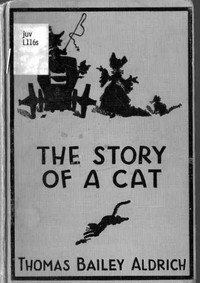
This digital edition of The Story of a Cat — Reading Notes is described by source-level measurements including 17,108 words, 1 hr 15 min estimated reading time, and 3 detected text sections.
The text analysis averages about 18.0 words per sentence, while the detected sections provide another way to judge how the source is divided.
Project Gutenberg metadata also associates the work with “Cats -- Juvenile fiction,” connecting these edition facts with the source record’s subject description.
Explore this collection
These alternatives are selected using recorded categories and estimated reading time.
About 77 minutes
Fantasy Juvenile Worlds
17,541 recorded words. 2 minutes difference from this book's estimate.
View Gutenberg source #24053About 66 minutes
Fantasy Juvenile Worlds
15,176 recorded words. 9 minutes difference from this book's estimate.
View Gutenberg source #33667About 60 minutes
Fantasy Juvenile Worlds
13,735 recorded words. 15 minutes difference from this book's estimate.
View Gutenberg source #37807Search stored excerpts and compare books → Choose by your preferences →
Choices use stored catalog measurements. Estimates vary with reading speed. A shared category is a catalog label, not a claim that two books have the same argument or literary quality.
Search reads excerpt text stored with this catalog and links to its associated Gutenberg record. The connection is stored in the site database; this tool does not recheck that every excerpt is word-for-word identical to that external record. Excerpt search does not cover every chapter and does not verify historical publication dates.
Catalog snapshot checked: 2026-09-26. Coverage: 99 public books, 99 available source excerpts.
Calculated from edition completeness, EPUB availability, text structure and catalogue metadata. Not a user rating.
Total of 100 points, scaled to a 2.5-5.0 range. Editions with an empty description or a missing EPUB file are not scored.
Public-domain source text
The source text is kept in the dedicated reader, separate from this catalogue record and its commentary.
The excerpts open in mid-18th-century Paris under Louis XV, introducing the wealthy, charitable Countess Yolande de la Grenouillère, whose passion for animals has led to a series of comic deaths: a parrot from parsley, a pug from biscuits, an ape from a cold caught after breaking its chain. The countess's grief is treated with gentle mockery, and her friends' suggestions of squirrels, canaries, and white mice are all refused. The story quickly shifts to the cat, Mother Michel, and the steward Lustucru, who plots against her. The translator, Thomas Bailey Aldrich, notes in his preface that the tale was originally turned into English for two small readers at his fireside, later appearing in a juvenile magazine.
The catalog subjects list cats, pets, and older women, but the excerpts show that the cat is only one of many animals in the countess's menagerie. The countess herself is an older woman, but her characterization is limited to her wealth, charity, and comical grief over dead pets. The cat, Mother Michel, is not directly described in the excerpts; instead, the narrative focuses on the humans around her. The steward Lustucru is the active schemer, and the cat is the object of his plots. The excerpts also introduce a fortune-teller, Madame Bradamor, and a street boy, Nicholas Faribole, suggesting a broader social world than the catalog implies.
Lustucru's villainy is rendered in comic, exaggerated terms. He searches for an accomplice, rejecting the household domestics as too devoted to Mother Michel. His walk on the quay is described with mock solemnity: 'the breeze of the morning failed to cool his blood, heated with evil passions.' The boy Faribole, who lives by selling May-bugs and fishing for logs, is a vivid street urchin. The setting is specific: the mansion of the Countess de la Grenouillère, the quay, the fortune-teller's street. The translation retains French names and titles, and the silhouettes by L. Hopkins are mentioned in the preface as the translator's plea for publishing the book.
The excerpts do not reveal the cat's fate or the outcome of Lustucru's plots. The catalog subject 'older women' might refer to the countess, but her role in the excerpts is brief. The cat's perspective is absent; the story is told from a human viewpoint. The translation's date (1878) and the preface's mention of a juvenile magazine audience suggest a Victorian-era sensibility, but the excerpts show a tone closer to farce than sentiment. Readers should not expect a realistic animal story; instead, the humor lies in the human characters' absurdities.
The excerpts offer a glimpse of a comic tale set in a historically specific Paris, with a cast that includes a wealthy widow, a scheming steward, a fortune-teller, and a resourceful street boy. The cat, though titular, is more a catalyst than a character. Readers interested in 19th-century translations of French children's literature or in the evolution of animal stories may find this a curious artifact. The silhouettes, mentioned in the preface, are a distinctive feature of this edition.
Mother Michel’s quiet cleverness stayed with me long after the last page—not for any grand lesson, but for how softly she moved through a world that underestimated her. It reminded me of that same lingering warmth I felt with Two Prisoners — Reading Companion, where patience holds more weight than any chase. Some stories simply settle beside you, unhurried, like an old cat finding its spot.
A brief reflection can help important ideas stay with you longer.