About 66 minutes
Two Prisoners — Reading Companion
Fantasy Juvenile Worlds
15,176 recorded words. 6 minutes difference from this book's estimate.
View Gutenberg source #33667
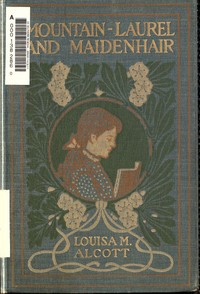
For Mountain-Laurel and Maidenhair — Edition Insights, the stored edition analysis reports 13,735 words, 1 hr estimated reading time, and 2 detected text sections.
The text analysis averages about 23.6 words per sentence, while the detected sections provide another way to judge how the source is divided.
Project Gutenberg metadata also associates the work with “Mountain life -- Juvenile fiction,” connecting these edition facts with the source record’s subject description.
Explore this collection
These alternatives are selected using recorded categories and estimated reading time.
About 66 minutes
Fantasy Juvenile Worlds
15,176 recorded words. 6 minutes difference from this book's estimate.
View Gutenberg source #33667About 75 minutes
Fantasy Juvenile Worlds
17,108 recorded words. 15 minutes difference from this book's estimate.
View Gutenberg source #27472About 77 minutes
Fantasy Juvenile Worlds
17,541 recorded words. 17 minutes difference from this book's estimate.
View Gutenberg source #24053Search stored excerpts and compare books → Choose by your preferences →
Choices use stored catalog measurements. Estimates vary with reading speed. A shared category is a catalog label, not a claim that two books have the same argument or literary quality.
Search reads excerpt text stored with this catalog and links to its associated Gutenberg record. The connection is stored in the site database; this tool does not recheck that every excerpt is word-for-word identical to that external record. Excerpt search does not cover every chapter and does not verify historical publication dates.
Catalog snapshot checked: 2026-09-26. Coverage: 99 public books, 99 available source excerpts.
Calculated from edition completeness, EPUB availability, text structure and catalogue metadata. Not a user rating.
Total of 100 points, scaled to a 2.5-5.0 range. Editions with an empty description or a missing EPUB file are not scored.
Public-domain source text
The source text is kept in the dedicated reader, separate from this catalogue record and its commentary.
From the opening exchange between Emily and Rebecca, Alcott establishes character through contrasting speech patterns. Emily speaks in languid, appreciative phrases—'I have not much appetite, and can't eat if things are not nice and pretty'—while Becky's dialect is marked by contractions and colloquialisms: 'Our laurel is jest in blow, and I'm real glad you come in time to see it.' The mismatch in vocabulary and rhythm immediately signals their different stations and temperaments, yet the dialogue also conveys mutual goodwill. Becky's offer to 'bring you a lot, as soon's ever I get time' is both practical and warm, while Emily's request for 'that blue one' reveals a preference for aesthetics over utility. These early lines do more than introduce characters; they dramatize the tension between refinement and rustic simplicity that runs through the narrative.
Alcott uses dialect sparingly but precisely to root the story in a specific rural setting. Becky's speech includes dropped g's ('fixin',' 'goin'), nonstandard verb forms ('I done'), and regional contractions ('ain't,' 'jest'). These are not merely decorative; they contrast with Emily's more standard English, which itself carries a slightly formal, bookish tone. When Becky says, 'I'm real glad you like it: most folks do, if they don't mind it being plain and quiet up here,' the word 'plain' echoes the farmhouse's simplicity, while her syntax—the double negative and dropped auxiliary—marks her as a local. Alcott avoids overdoing the dialect; it appears in natural rhythms rather than phonetic spelling, making it readable while still evoking place. The effect is to ground the friendship in a believable social geography, where language difference is an obstacle that kindness can bridge.
Alcott invests ordinary household items with emotional weight. The 'ugly crockery cup and saucer' that Becky replaces with 'pretty china ones' is a small act of deference, but it also signals Becky's attentiveness to Emily's needs. Later, the 'glass of rosy laurel and delicate maidenhair fern' on the breakfast tray becomes a recurring symbol: the wild mountain plant brought indoors for a sick girl. Alcott describes the flowers with botanical precision—'rosy laurel' and 'maidenhair fern'—but also with a touch of sentiment, as Emily's eyes brighten at the sight. These objects are not mere props; they carry the story's themes of care, adaptation, and the exchange between the natural and the domestic. The 'blue cup' that Emily requests is a small assertion of taste, while Becky's willingness to fetch it shows her practical empathy. Through such details, Alcott builds a world where material things reflect inner states.
A central scene in the excerpts involves Mrs. Spenser gently discouraging the girls' plan for Becky to become a poet. Alcott renders this as a nuanced conversation, not a simple moral lesson. Mrs. Spenser's speech is measured and literary—she quotes Emerson's 'So near is grandeur to our dust'—but her advice is practical: 'First live, then write.' Becky's reaction is complex: her face grows 'pale and serious, even a little sad,' yet she resolves to 'settle right down and do my work cheerful.' Alcott does not let the mother's wisdom go unchallenged; Emily protests, 'How can you spoil it all?' The authorial stance is ambiguous: the narrative validates Mrs. Spenser's caution, but it also records the 'courage and confidence' that spring up in Becky. The scene thus dramatizes a genuine conflict between aspiration and duty, without reducing either side to caricature. The 'verses timidly offered by Becky' are never quoted, leaving their quality uncertain—a deliberate choice that keeps the focus on the characters' hopes rather than on literary judgment.
Alcott often conveys emotion through what is not said. When Becky listens to Mrs. Spenser, her face grows 'pale and serious,' but her verbal response is brief: 'Thank you, ma'am! I will remember.' The narrative then notes that 'her eyes shone, her lips were firm'—physical details that imply an inner resolve not fully articulated. Similarly, the earlier scene where the girls 'groped their way home hand in hand, leaving another secret for the laurels to keep' suggests a bond that words cannot capture. Alcott uses the natural setting—the laurels, the dark—as a repository for unspoken feelings. This restraint is characteristic of her style: she trusts readers to infer the emotional weight from gesture and context. The result is a story that feels both intimate and reserved, where the most important exchanges happen in the spaces between dialogue.
Readers attentive to Alcott's craft will notice how she balances sentiment with realism. The invalid's recovery is not miraculous, and the farmhouse remains a place of hard work. The friendship between Emily and Becky develops through small acts—a rearranged cushion, a shared secret—rather than grand declarations. Alcott's prose is plain but not artless; every dialect phrase and domestic object serves to deepen character and theme. This story rewards a slow reading that savors the texture of its language and the quiet drama of its moral choices.
That bit about recognizing someone through their own words stayed with me long after closing it. It made me think of Norman Vallery, too—how quiet choices and plain speech can show a person’s heart more gently than any grand statement. Norman Vallery; or, How to Overcome Evil with Good — Story, Setting & Ideas lingers in that same soft, unhurried way, like a conversation you’re not quite ready to leave.
Save your reaction, strongest insight, and memorable passage.