About 304 minutes
The Head Girl at the Gables — Reading Companion
Fantasy Juvenile Worlds
69,787 recorded words. 1 minutes difference from this book's estimate.
View Gutenberg source #32575
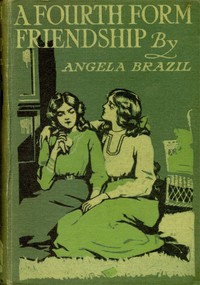
The catalog record for A Fourth Form Friendship: A School Story — Inside the Classic provides practical reading context through 69,577 words, 5 hr 3 min estimated reading time, and 7 detected text sections.
The text analysis averages about 16.2 words per sentence, while the detected sections provide another way to judge how the source is divided.
Project Gutenberg metadata also associates the work with “Friendship -- Juvenile fiction,” connecting these edition facts with the source record’s subject description.
Explore this collection
These alternatives are selected using recorded categories and estimated reading time.
About 304 minutes
Fantasy Juvenile Worlds
69,787 recorded words. 1 minutes difference from this book's estimate.
View Gutenberg source #32575About 302 minutes
Fantasy Juvenile Worlds
69,326 recorded words. 1 minutes difference from this book's estimate.
View Gutenberg source #33263About 307 minutes
Fantasy Juvenile Worlds
70,422 recorded words. 4 minutes difference from this book's estimate.
View Gutenberg source #25928Search stored excerpts and compare books → Choose by your preferences →
Choices use stored catalog measurements. Estimates vary with reading speed. A shared category is a catalog label, not a claim that two books have the same argument or literary quality.
Search reads excerpt text stored with this catalog and links to its associated Gutenberg record. The connection is stored in the site database; this tool does not recheck that every excerpt is word-for-word identical to that external record. Excerpt search does not cover every chapter and does not verify historical publication dates.
Catalog snapshot checked: 2026-09-26. Coverage: 99 public books, 99 available source excerpts.
Calculated from edition completeness, EPUB availability, text structure and catalogue metadata. Not a user rating.
Total of 100 points, scaled to a 2.5-5.0 range. Editions with an empty description or a missing EPUB file are not scored.
Public-domain source text
The source text is kept in the dedicated reader, separate from this catalogue record and its commentary.
Angela Brazil's A Fourth Form Friendship opens with Aldred Laurence methodically checking off art supplies—'Two pencils, an india-rubber, a penknife, camp stool, easel, paint-box'—a list that establishes her as organized and detail-oriented. This attention to practicalities recurs throughout the excerpts, from rehearsals to packing for holidays, grounding the story in the tangible routines of school life. Yet the narrative voice shifts notably when Aldred lies awake after a successful play, troubled by the mystery of the Chinese lanterns. The contrast between her outward competence and private unease signals a more introspective turn, one that the excerpts only partially develop.
The narrative voice in the excerpts is predominantly third-person, closely aligned with Aldred's perspective. It conveys her pride in organizing the theatricals—'It was very gratifying to Aldred to feel that her trouble had really been rewarded with success'—but also her growing awareness of consequences. When Mabel suggests investigating who lit the forbidden lanterns, Aldred advises silence, arguing that 'it's rather mean to try to ferret it out.' This moment reveals a pragmatic, protective streak that complicates her earlier earnestness. The voice here is measured, avoiding melodrama; Aldred's internal conflict is rendered through understatement rather than explicit emotion. The prose maintains a steady, almost reportorial tone, even when describing her sleepless night, which makes the shift from external action to internal reflection all the more striking.
The excerpts show two distinct paces: the brisk, event-driven sequences of rehearsals and the slower, more reflective passages of aftermath. Chapter I's list-making and the theatrical preparations move quickly, with dialogue and action propelling the narrative. In contrast, Chapter X's description of Christmas at home adopts a more leisurely tempo, dwelling on Aldred's changed relationship with her father and aunt. The sentence 'Aldred thought that this Christmas was the most enjoyable one she had ever spent' introduces a reflective pause, emphasizing emotional growth over plot advancement. This alternation between busy school scenes and quieter domestic interludes creates a rhythm that mirrors the school year's cycle of terms and holidays. The lantern incident, unresolved in the excerpts, hangs as a loose thread, suggesting that the pace may quicken again when the mystery resurfaces.
The settings in the excerpts—the art studio, the stage, the dormitory—are rendered with specific, functional details. The list of art supplies and the mention of 'Chinese lanterns' and 'flimsy clothes' ground the story in a tangible world. The lanterns themselves carry symbolic weight: they represent both the thrill of performance and the risk of transgression. Mabel's fear that 'if the string had broken through while any of us were underneath, we might have been burnt to death' introduces a note of real danger, contrasting with the otherwise cosy school atmosphere. The dormitory conversation, with its whispered confidences and the image of Mabel 'snuggl[ing] a little more cosily under the eider-down,' reinforces the intimacy of the setting. These details are not merely decorative; they anchor the moral dilemmas in physical spaces, making abstract questions of loyalty and responsibility feel immediate.
Readers attentive to narrative voice will notice how Brazil uses Aldred's perspective to filter events, sometimes withholding judgment. The excerpts leave the lantern mystery unresolved, inviting speculation about how Aldred's conscience will develop. Pay particular attention to scenes where Aldred is alone or reflective—these moments often carry the story's emotional weight. The contrast between her public competence and private doubts is a thread worth following through the full text.
That rainy afternoon, I kept returning to the margins of A Fourth Form Friendship, struck by how Aldred’s loyalty quietly frayed into something more complicated. Later, browsing idly, I found myself holding The Rich Little Poor Boy — Context and Discussion, where that same unease about goodness and privilege seemed to echo, soft as rain on glass.
Answer a few questions and save a private reflection on this device.