About 303 minutes
A Fourth Form Friendship: A School Story — Inside the Classic
Fantasy Juvenile Worlds
69,577 recorded words. 1 minutes difference from this book's estimate.
View Gutenberg source #32524
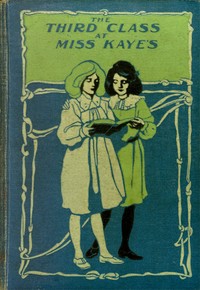
This digital edition of The Third Class at Miss Kaye's: A School Story — Story, Setting & Ideas is described by source-level measurements including 69,326 words, 5 hr 2 min estimated reading time, and 7 detected text sections.
The text analysis averages about 18.1 words per sentence, while the detected sections provide another way to judge how the source is divided.
Project Gutenberg metadata also associates the work with “Schools -- Juvenile fiction,” connecting these edition facts with the source record’s subject description.
Explore this collection
These alternatives are selected using recorded categories and estimated reading time.
About 303 minutes
Fantasy Juvenile Worlds
69,577 recorded words. 1 minutes difference from this book's estimate.
View Gutenberg source #32524About 304 minutes
Fantasy Juvenile Worlds
69,787 recorded words. 2 minutes difference from this book's estimate.
View Gutenberg source #32575About 299 minutes
Fantasy Juvenile Worlds
68,704 recorded words. 3 minutes difference from this book's estimate.
View Gutenberg source #35972Search stored excerpts and compare books → Choose by your preferences →
Choices use stored catalog measurements. Estimates vary with reading speed. A shared category is a catalog label, not a claim that two books have the same argument or literary quality.
Search reads excerpt text stored with this catalog and links to its associated Gutenberg record. The connection is stored in the site database; this tool does not recheck that every excerpt is word-for-word identical to that external record. Excerpt search does not cover every chapter and does not verify historical publication dates.
Catalog snapshot checked: 2026-09-26. Coverage: 99 public books, 99 available source excerpts.
Calculated from edition completeness, EPUB availability, text structure and catalogue metadata. Not a user rating.
Total of 100 points, scaled to a 2.5-5.0 range. Editions with an empty description or a missing EPUB file are not scored.
Public-domain source text
The source text is kept in the dedicated reader, separate from this catalogue record and its commentary.
The novel opens not with a classroom scene but with a wet-day party, a choice that immediately establishes the social dynamics of the school. The rain that drives the girls indoors also drives the plot: it forces interaction, reveals character through conversation, and sets a tone of contained energy. Brazil uses the weather as a structural device, letting the drip of rain punctuate the opening paragraphs and mirror the gradual drip of information about the girls' personalities.
The narrative voice is brisk and observant, often aligning with Sylvia's perspective but occasionally pulling back to describe group behavior. The pace is uneven—quick during arguments, slower during descriptions of gifts or games—reflecting the rhythm of school life itself.
The excerpts show Brazil using dialogue to define characters without authorial commentary. When Nina recites a nursery rhyme about days of the week, Marian dismisses it as "silly rubbish," and Nina responds plaintively. The exchange is brief but reveals Marian's self-styled strong-mindedness, Nina's superstition and need for approval, and the group's hierarchy. The argument over scissors—"Really, Marian! Let her open her own parcels"—further establishes Marian as controlling and Linda as a defender of boundaries. Brazil lets the girls speak for themselves, and the reader infers character from tone and word choice.
Brazil devotes considerable space to the unwrapping of birthday presents, a scene that could be static but becomes a vehicle for character and theme. Each gift—a Brownie camera, a copy of The Talisman, a mother-of-pearl purse, a table croquet set—is described with precise detail, and the girls' reactions to them reveal their values. Hazel's practical warning about dark weather undercuts Sylvia's excitement; Linda's enthusiasm for the croquet set shows her desire for group play. The objects also connect the girls to their families: the camera from Mother, the book from Father, the purse from friends. This attention to material culture is typical of Brazil's school stories, where possessions often carry emotional weight.
Brazil alternates between extended scenes (the wet-day party, the birthday present opening) and compressed summaries of time passing. The chapter titles suggest a rhythm of events—"A Wet-day Party," "An Important Decision," "A First Day at School"—but within chapters, the pace shifts. The opening paragraph uses short, repetitive phrases ("Drip, drip, drip!") to create a sense of monotony, then accelerates into dialogue. Later, the description of parcels slows the narrative, allowing the reader to pause and observe. This variation prevents the story from becoming either breathless or sluggish, and it mirrors the way school days feel: sometimes eventful, sometimes filled with small rituals.
Readers attentive to narrative voice will notice that Brazil rarely judges her characters directly. Instead, she lets their words and actions accumulate. The pace of the excerpts suggests a story that values both incident and atmosphere. Pay attention to how the weather, the objects, and the girls' own speech create a sense of place and community that is specific to Miss Kaye's.
There is a quiet kinship between Sylvia's first uncertain days at Miss Kaye's and the way that other young woman, from that other book, finds herself unmoored in a strange town. Both feel the weight of unfamiliar rooms and untested friendships. I often recall Janice Day — Text and Context beside it on my shelf, two gentle hearts learning their own strength.
Build a private reading journal entry for this title.