About 303 minutes
A Fourth Form Friendship: A School Story — Inside the Classic
Fantasy Juvenile Worlds
69,577 recorded words. 1 minutes difference from this book's estimate.
View Gutenberg source #32524
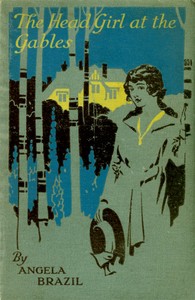
Before opening The Head Girl at the Gables — Reading Companion, the edition data offers a quick orientation: 69,787 words, 5 hr 4 min estimated reading time, and 8 detected text sections.
The text analysis averages about 13.6 words per sentence, while the detected sections provide another way to judge how the source is divided.
Project Gutenberg metadata also associates the work with “Boarding schools -- Juvenile fiction,” connecting these edition facts with the source record’s subject description.
Explore this collection
These alternatives are selected using recorded categories and estimated reading time.
About 303 minutes
Fantasy Juvenile Worlds
69,577 recorded words. 1 minutes difference from this book's estimate.
View Gutenberg source #32524About 302 minutes
Fantasy Juvenile Worlds
69,326 recorded words. 2 minutes difference from this book's estimate.
View Gutenberg source #33263About 307 minutes
Fantasy Juvenile Worlds
70,422 recorded words. 3 minutes difference from this book's estimate.
View Gutenberg source #25928Search stored excerpts and compare books → Choose by your preferences →
Choices use stored catalog measurements. Estimates vary with reading speed. A shared category is a catalog label, not a claim that two books have the same argument or literary quality.
Search reads excerpt text stored with this catalog and links to its associated Gutenberg record. The connection is stored in the site database; this tool does not recheck that every excerpt is word-for-word identical to that external record. Excerpt search does not cover every chapter and does not verify historical publication dates.
Catalog snapshot checked: 2026-09-26. Coverage: 99 public books, 99 available source excerpts.
Calculated from edition completeness, EPUB availability, text structure and catalogue metadata. Not a user rating.
Total of 100 points, scaled to a 2.5-5.0 range. Editions with an empty description or a missing EPUB file are not scored.
Public-domain source text
The source text is kept in the dedicated reader, separate from this catalogue record and its commentary.
The first chapter of The Head Girl at the Gables opens not with a pupil but with the Principal, Miss Kingsley, planning the autumn term in her study, surrounded by carnations, a Chippendale mirror, and an etching of 'Dante's Dream'. The September sunshine catches the silver threads in her hair. Beside her, Miss Janet rocks in a chair, jotting notes on an envelope. This calm administrative scene quickly gives way to the schoolgirls' perspective: Lorraine, Vivien, and Patsie emerge as central figures, their voices marked by slang, impatience, and a desire for excitement. The excerpts show a school where rules are questioned, secrets are kept, and the girls actively seek sensation—whether by spying on a French teacher's seaside rendezvous or founding a 'Sensation Bureau' to manufacture drama.
The opening scene is unusual for a school story: it begins with the headmistress, not a new girl. Miss Kingsley is described with specific details—'ripply brown hair', 'silver threads', a 'touch of pink in her cheeks' from Cheviot Hills breezes—that suggest a character with her own history. The study's furnishings (carnations, Chippendale mirror, etching of 'Dante's Dream') establish a cultured, orderly world. Yet this order is immediately contrasted with the girls' perspective. Lorraine, introduced later, is sharp-eyed and suspicious: she recognizes Madame Bertier's grey costume and crimson toque from a cliff-top vantage, and is frustrated by a 'half-memory' of the man with her. The narrative shifts between adult planning and adolescent observation, hinting at tensions between authority and private knowledge.
In the gymnasium, Vivien declares the school 'a very second-rate sort of show' and 'a set of blighters'. Her complaint about dry oatcake—'It's as dry as chumping chaff'—is met with Audrey's lament about margarine shortages. Lorraine, defensive of the school, counters that they have societies, but Vivien dismisses them as slack. Patsie, the jester, proposes a 'Sensation Bureau' to supply excitement: 'An elopement? A fire? A burglary?' The girls' language is colloquial and performative—'buck up', 'silly cockchafer', 'dying duck in a thunderstorm'—and their boredom is a driving force. The Bureau, offered with mock-commercial terms ('Cheques and postal orders must be crossed'), becomes a plot device that the excerpts suggest will generate the term's adventures.
A later excerpt places Lorraine and Margaret on cliffs, using field-glasses to spy on the shore below. They spot Madame Bertier with a man—'a kiss! How touching!'—and Lorraine is troubled by a familiar face she cannot place. The scene is voyeuristic and slightly ironic: the girls are 'hundreds of feet above', unseen spectators. Margaret dismisses the flirtation as not worth 'wasting valuable time', but Lorraine's 'half-memory' lingers. This moment of surveillance echoes the earlier tension between adult authority and pupil knowledge. The cliffs, the field-glasses, and the 'flutter of a feminine skirt' create a vivid, almost cinematic image. The excerpt breaks off before the man is identified, leaving a thread of mystery that the reader must follow through the full text.
The excerpts move from the Principal's study to the gymnasium to the cliffs, each scene introducing a different tone: administrative calm, rebellious banter, and covert observation. The narrative voice is third-person but often aligns with the girls' perspective, using their idioms ('jogging along', 'brain-wave'). The opening chapter's focus on Miss Kingsley may mislead a reader expecting a pupil-centric start; the later excerpts re-center the girls. The Sensation Bureau and the cliff-top spying are set up as early plot engines, but the excerpts do not reveal their outcomes. A first reader should note the recurring motif of watching—Miss Kingsley planning, girls spying, Patsie performing—and the way small details (a half-remembered face, a piece of dry oatcake) accumulate into larger concerns about loyalty, secrecy, and the desire for a more exciting life.
The excerpts from The Head Girl at the Gables offer a fragmented but suggestive view of Angela Brazil's school-world. The reader is left with questions: Who is the man with Madame Bertier? Will the Sensation Bureau succeed? How will Lorraine's half-memory resolve? The text rewards attention to small, concrete details—the etching over the mantelpiece, the field-glasses, the slangy complaints—that build character and atmosphere. Approach the full novel as a series of such scenes, each layering the girls' private lives against the school's official routines.
There’s something about the quiet mischief at The Gables, that little thrill of secret plans, that stayed with me long after closing it. It reminded me of another story where friendship carries the same tender weight. A Fourth Form Friendship: A School Story — Inside the Classic holds that same gentle ache of growing up, the kind you find yourself thinking about on a slow afternoon.
Save your reaction, strongest insight, and memorable passage.