About 307 minutes
Norman Vallery; or, How to Overcome Evil with Good — Story, Setting & Ideas
Fantasy Juvenile Worlds
70,422 recorded words. 0 minutes difference from this book's estimate.
View Gutenberg source #25928
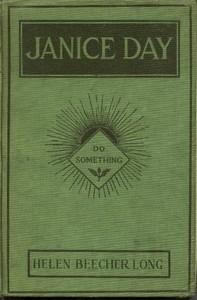
This digital edition of Janice Day — Text and Context is described by source-level measurements including 70,436 words, 5 hr 7 min estimated reading time, and 8 detected text sections.
The text analysis averages about 13.7 words per sentence, while the detected sections provide another way to judge how the source is divided.
Project Gutenberg metadata also associates the work with “Young women -- Juvenile fiction,” connecting these edition facts with the source record’s subject description.
Explore this collection
These alternatives are selected using recorded categories and estimated reading time.
About 307 minutes
Fantasy Juvenile Worlds
70,422 recorded words. 0 minutes difference from this book's estimate.
View Gutenberg source #25928About 308 minutes
Fantasy Juvenile Worlds
70,718 recorded words. 1 minutes difference from this book's estimate.
View Gutenberg source #31387About 304 minutes
Fantasy Juvenile Worlds
69,787 recorded words. 3 minutes difference from this book's estimate.
View Gutenberg source #32575Search stored excerpts and compare books → Choose by your preferences →
Choices use stored catalog measurements. Estimates vary with reading speed. A shared category is a catalog label, not a claim that two books have the same argument or literary quality.
Search reads excerpt text stored with this catalog and links to its associated Gutenberg record. The connection is stored in the site database; this tool does not recheck that every excerpt is word-for-word identical to that external record. Excerpt search does not cover every chapter and does not verify historical publication dates.
Catalog snapshot checked: 2026-09-26. Coverage: 99 public books, 99 available source excerpts.
Calculated from edition completeness, EPUB availability, text structure and catalogue metadata. Not a user rating.
Total of 100 points, scaled to a 2.5-5.0 range. Editions with an empty description or a missing EPUB file are not scored.
Public-domain source text
The source text is kept in the dedicated reader, separate from this catalogue record and its commentary.
From the moment Janice Day steps off the narrow-gauge train onto the lake steamer Constance Colfax, her quick eye and amused commentary set the tone. She finds the “wheezy old steamer” and its “rheumatically” turning wheels ridiculous, yet she is genuinely curious about Poketown. The excerpts show a heroine who observes closely—noting the “row of nondescripts” on the dock—and who acts on her observations. Within the first chapters, she has already begun canvassing for a boys’ reading-room, a project that pits her against the stern Elder Concannon, who declares, “I disapprove, Miss—I disapprove!” The narrative voice is brisk and concrete, favoring dialogue and specific detail over sentiment.
The catalog subjects list “Young women,” “New England,” and “Villages,” but the excerpts reveal a village defined by its resistance to change. Elder Concannon’s refusal to support the reading-room—“You have not proved your case—to my mind”—is not the only hurdle. Janice must also manage her cousin Marty’s skepticism: “Aw, say! Let’s talk about the treasure chest we’ve found in our back yard.” Yet the same village supplies allies. Miss ’Rill Scattergood helps clean and kalsomine the room; Walky Dexter handles carting; a storekeeper donates oilcloth. The text shows a community where opposition and cooperation coexist, and where Janice’s persistence—“I’ll just show him!”—gradually turns skeptics into contributors. The reading-room becomes a concrete test of her ability to navigate local politics.
Janice’s project is not abstract. The excerpts detail the practical steps: she sets aside three dollars for rent, purchases a second-hand table and kitchen chairs, and secures lumber. A painter gives her brush and wood-stain; Hopewell Drugg supplies bracket lamps at wholesale discount. The narrative lingers on the physical transformation of the empty store—curtains to “keep out the prying eyes,” a hanging lamp to light the reading-table. This attention to material detail grounds Janice’s idealism in carpentry, paint, and oilcloth. The reader sees exactly how a reading-room gets built, down to the “enameled oilcloth to cover neatly the long table.” The story treats the work as interesting in itself, not merely as a backdrop for character growth.
Helen Beecher Long gives Janice a distinctive voice: direct, humorous, and determined. When Elder Concannon lectures her, she replies, “Oh, my goodness! I wouldn’t undertake to have anything to do with governing them—no, indeed!” The exclamation marks and the repeated “I’ll show him” signal a protagonist who talks back without being rude. Other characters are drawn through their speech patterns: Marty’s “Say! would a duck swim?” and Walky Dexter’s comic silence under a vow of secrecy. The dialogue carries the plot forward—Janice’s canvass, her negotiations with the boys, her rebuttals to the Elder—and reveals social dynamics without authorial commentary. The excerpts suggest a book where what people say matters as much as what they do.
Readers approaching Janice Day should expect a story driven by practical problem-solving and local color, not by dramatic conflict. The excerpts offer no hint of romance or adventure beyond the reading-room campaign. Pay attention to the minor characters—Miss ’Rill, Walky, Marty—who provide comic relief and community texture. The novel’s interest lies in how a determined young woman turns a village’s skepticism into grudging support, one subscription at a time.
Poketown’s reading-room made me think of my own small library visits, shelves smelling of dust and promise. It reminded me of how, in The Third Class at Miss Kaye's: A School Story — Story, Setting & Ideas, a single determined person shifts a whole room’s mood. Both books catch that moment when quiet effort starts a ripple I still feel.
Your answers remain private and are stored only in this browser.