About 165 minutes
The Bishop and the Boogerman — Context and Discussion
Science Fiction Utopias
37,782 recorded words. 21 minutes difference from this book's estimate.
View Gutenberg source #36370
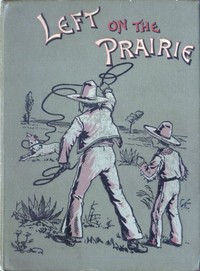
This digital edition of Left on the Prairie — Background and Themes is described by source-level measurements including 32,912 words, 2 hr 24 min estimated reading time, and 5 detected text sections.
The text analysis averages about 17.0 words per sentence, while the detected sections provide another way to judge how the source is divided.
Project Gutenberg metadata also associates the work with “Boys -- Juvenile fiction,” connecting these edition facts with the source record’s subject description.
Explore this collection
These alternatives are selected using recorded categories and estimated reading time.
About 165 minutes
Science Fiction Utopias
37,782 recorded words. 21 minutes difference from this book's estimate.
View Gutenberg source #36370About 110 minutes
Science Fiction Utopias
25,195 recorded words. 34 minutes difference from this book's estimate.
View Gutenberg source #31542About 189 minutes
Science Fiction Utopias
43,246 recorded words. 45 minutes difference from this book's estimate.
View Gutenberg source #26043Search stored excerpts and compare books → Choose by your preferences →
Choices use stored catalog measurements. Estimates vary with reading speed. A shared category is a catalog label, not a claim that two books have the same argument or literary quality.
Search reads excerpt text stored with this catalog and links to its associated Gutenberg record. The connection is stored in the site database; this tool does not recheck that every excerpt is word-for-word identical to that external record. Excerpt search does not cover every chapter and does not verify historical publication dates.
Catalog snapshot checked: 2026-09-26. Coverage: 99 public books, 99 available source excerpts.
Calculated from edition completeness, EPUB availability, text structure and catalogue metadata. Not a user rating.
Total of 100 points, scaled to a 2.5-5.0 range. Editions with an empty description or a missing EPUB file are not scored.
Public-domain source text
The source text is kept in the dedicated reader, separate from this catalogue record and its commentary.
The opening chapter of Left on the Prairie establishes a dual register that persists throughout the excerpts: a nostalgic, almost pastoral tone when describing the Wilson family's memories of England, and a stark, sensory realism when depicting the prairie itself. The father's sigh—'Old England was like a garden, but this place is nothing but a wilderness'—sets up a contrast between cultivated safety and untamed exposure. This tension in voice is not merely thematic; it governs the narrative's rhythm, alternating between reflective passages and abrupt, action-driven scenes.
The narrator frequently shifts from a childlike, sentimental register—'Little Jack Wilson had been born in England'—to a more detached, almost documentary description of the prairie's harshness: 'the cold winds came sweeping down from the distant mountains and rushed shrieking across the plains.' This oscillation is not random; it mirrors Jack's own emotional state. When he is with his parents or with Pedro, the prose softens, using words like 'pleasant,' 'kind,' and 'fond.' In moments of danger or isolation, the vocabulary becomes sharper: 'burnt-up,' 'whistled round the frame houses as if threatening to blow them down.' The narrative voice thus functions as a barometer of safety, making the reader feel the precariousness of Jack's world through linguistic texture alone.
The excerpts reveal a deliberate variation in pacing. Long descriptive paragraphs—such as the introduction of Longview—slow the narrative, building a sense of place and stasis. In contrast, dialogue scenes, like Jack's conversation with Mr. Stuart, accelerate the tempo through short exchanges and quick shifts in focus: 'What's your name, my boy?' / 'Jack Wilson, please, sir.' The action sequences, though brief in the excerpts, are signaled by abrupt transitions: 'Then began a terrible fight between the man and the horse.' The chapter titles themselves—'Jack Is Deserted,' 'Jack Is Rescued'—suggest a rhythm of crisis and recovery. This pattern of tension and release is reinforced by the narrator's habit of summarizing intervals of time ('For some days he kept looking around') before plunging back into immediate scene.
Several concrete details recur across the excerpts, anchoring the story in sensory experience. The 'burnt-up prairie' and 'staring rows of wooden houses' establish a visual baseline of dryness and exposure. Jack's 'little collection of curiosities' appears as a motif of his resourcefulness and attachment to home. The horse Señor and the Mexican Pedro are introduced with specific, affectionate description—'Señor's rough head'—and their departure is marked by a rare moment of emotional directness: 'a tear in his eye.' These recurring elements do not merely decorate; they serve as touchstones for the reader, creating continuity across the episodic structure. The narrator's attention to small, tangible objects—provisions, a parcel, a tent—grounds the adventure in a material world that feels both fragile and dependable.
Readers attentive to language will notice how Cox uses shifts in sentence length and vocabulary to signal changes in Jack's fortunes. The narrative rarely lingers in one emotional register for long, and the prairie itself becomes a character through its repeated description as both monotonous and threatening. Approaching the text with an ear for these modulations—rather than focusing solely on plot—reveals a careful craft beneath the adventure story's surface.
There’s something tender in how Cox lets Jack’s quiet thoughts carry the prairie’s loneliness, softening the peril with a homesick heart. It reminds me of the wistful pace in The Motor Girls at Lookout Beach; Or, In Quest of the Runaways — Themes and Context, where the chase slows to let girls breathe. Old books, holding their pauses.
Answer a few questions and save a private reflection on this device.