About 307 minutes
The Confessions of Arsène Lupin — Story, Setting & Ideas
Science Fiction Utopias
70,527 recorded words. 3 minutes difference from this book's estimate.
View Gutenberg source #28093
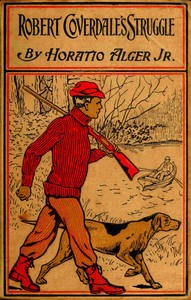
For Robert Coverdale's Struggle — A Reader’s Guide, the stored edition analysis reports 69,834 words, 5 hr 4 min estimated reading time, and 36 detected text sections.
The text analysis averages about 12.4 words per sentence, while the detected sections provide another way to judge how the source is divided.
Project Gutenberg metadata also associates the work with “New England -- History -- 19th century -- Fiction,” connecting these edition facts with the source record’s subject description.
Explore this collection
These alternatives are selected using recorded categories and estimated reading time.
About 307 minutes
Science Fiction Utopias
70,527 recorded words. 3 minutes difference from this book's estimate.
View Gutenberg source #28093About 294 minutes
Science Fiction Utopias
67,601 recorded words. 10 minutes difference from this book's estimate.
View Gutenberg source #37335About 316 minutes
Science Fiction Utopias
72,641 recorded words. 12 minutes difference from this book's estimate.
View Gutenberg source #36934Search stored excerpts and compare books → Choose by your preferences →
Choices use stored catalog measurements. Estimates vary with reading speed. A shared category is a catalog label, not a claim that two books have the same argument or literary quality.
Search reads excerpt text stored with this catalog and links to its associated Gutenberg record. The connection is stored in the site database; this tool does not recheck that every excerpt is word-for-word identical to that external record. Excerpt search does not cover every chapter and does not verify historical publication dates.
Catalog snapshot checked: 2026-09-26. Coverage: 99 public books, 99 available source excerpts.
Calculated from edition completeness, EPUB availability, text structure and catalogue metadata. Not a user rating.
Total of 100 points, scaled to a 2.5-5.0 range. Editions with an empty description or a missing EPUB file are not scored.
Public-domain source text
The source text is kept in the dedicated reader, separate from this catalogue record and its commentary.
The novel opens with a precise domestic tableau: Robert Coverdale, a fifteen-year-old boy in a calico shirt and patched trousers, is asked by his aunt whether he has seen his uncle. The uncle is at the tavern, drinking away his earnings. This early scene establishes a pattern of contrast—between the boy's resolution never to drink rum and his uncle's dissipation, between the aunt's despondency and Robert's emphatic nod. Alger's narrator directly addresses the reader, defending the choice of a ragged hero by listing his 'energy, talent, honesty and a resolute will.' The cabin on the cliff, with its fine sea view but furniture worth less than twenty-five dollars, becomes a symbol of precarious respectability.
Robert's clothing is a recurring point of tension. In the first chapter, the narrator anticipates that well-dressed city boys might 'turn up their noses' at his ragged appearance. When Robert arrives in Boston, two boys laugh at his outlandish clothes, but he responds with good humor rather than shame. He acknowledges his clothes are 'of strange cut' and asks for help finding a store. The scene in the clothing shop sharpens the pattern: a clerk dismisses Robert as a 'scarecrow' and assumes he wants a job, not to buy. Robert's cool retort—'Are you the owner of this shop?'—shifts the power dynamic. The clerk's rudeness is rebuked by a portly gentleman, and Robert is treated as a customer. Alger uses the clothing transaction to dramatize how a poor boy can command respect through self-possession and direct speech.
Alger's narrator repeatedly breaks the fourth wall, shaping how the reader should judge the hero. In the opening, the narrator says 'My readers will naturally ask if the fisherman had no children of his own,' then answers. Later, when describing Robert's poverty, the narrator insists that a boy with 'energy, talent, honesty and a resolute will' cannot be considered poor. This rhetorical strategy positions the reader as a potential skeptic who must be won over. The narrator also uses direct address to contrast city and country readers, assuming a city audience that might look down on a country boy. These interjections create a collaborative tone: the reader is invited to see past appearances and root for Robert's manly traits. The effect is to make the moral lesson explicit without relying on plot alone.
From the first chapter, the Coverdale household is under financial pressure. The uncle drinks up his earnings, leaving little for the family. The cabin's furniture would not fetch twenty-five dollars at auction. Later, a mortgage looms: a Mr. Jones complacently reflects that in four weeks he will turn Robert and his aunt 'out of doors.' This threat of homelessness is the engine of the struggle. The excerpts do not reveal whether Robert succeeds in raising the money, but the pattern is clear: the boy must navigate a world where adults are either weak (the uncle) or predatory (Mr. Jones, the rude clerk). Alger frames the conflict not as a single villain but as a series of tests—of honesty, temper, and resourcefulness—that Robert must pass to preserve his home.
Readers familiar with Alger's formula will recognize the setup: a virtuous boy, a threatened home, and a journey to the city. But the excerpts reward attention to small details—the calico shirt, the aunt's sewing, the clerk's sneer—that ground the moral drama in material reality. Notice how often Robert's voice carries the scene: his directness disarms mockery and exposes pretension. The novel's tension lies not in whether Robert will succeed, but in how his character will be tested by each new encounter.
Reading about Robert Coverdale’s quiet endurance in that fishing village, I found myself thinking of another sort of struggle. That old copy of Robert Coverdale's Struggle felt so small against the moral weight of revolutionary France, yet both share that ache of personal duty. Later, the memory drifted to The Gods are Athirst — Background and Themes. Odd, how one book’s shadow simply lingers into another’s light.
Use these questions to collect your thoughts before moving on.