About 304 minutes
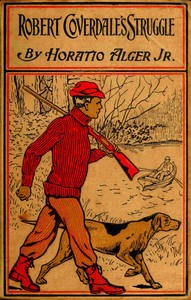
Robert Coverdale's Struggle — A Reader’s Guide
Science Fiction Utopias
69,834 recorded words. 3 minutes difference from this book's estimate.
View Gutenberg source #30372
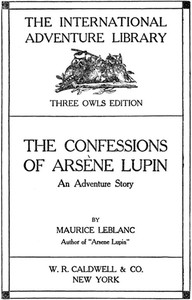
The Confessions of Arsène Lupin — Story, Setting & Ideas can be approached with a clearer sense of reading commitment from its source measurements: 70,527 words, 5 hr 7 min estimated reading time, and 9 detected text sections.
The text analysis averages about 13.3 words per sentence, while the detected sections provide another way to judge how the source is divided.
Project Gutenberg metadata also associates the work with “Adventure and adventurers -- Fiction,” connecting these edition facts with the source record’s subject description.
Explore this collection
These alternatives are selected using recorded categories and estimated reading time.
About 304 minutes
Science Fiction Utopias
69,834 recorded words. 3 minutes difference from this book's estimate.
View Gutenberg source #30372About 316 minutes
Science Fiction Utopias
72,641 recorded words. 9 minutes difference from this book's estimate.
View Gutenberg source #36934About 294 minutes
Science Fiction Utopias
67,601 recorded words. 13 minutes difference from this book's estimate.
View Gutenberg source #37335Search stored excerpts and compare books → Choose by your preferences →
Choices use stored catalog measurements. Estimates vary with reading speed. A shared category is a catalog label, not a claim that two books have the same argument or literary quality.
Search reads excerpt text stored with this catalog and links to its associated Gutenberg record. The connection is stored in the site database; this tool does not recheck that every excerpt is word-for-word identical to that external record. Excerpt search does not cover every chapter and does not verify historical publication dates.
Catalog snapshot checked: 2026-09-26. Coverage: 99 public books, 99 available source excerpts.
Calculated from edition completeness, EPUB availability, text structure and catalogue metadata. Not a user rating.
Total of 100 points, scaled to a 2.5-5.0 range. Editions with an empty description or a missing EPUB file are not scored.
Public-domain source text
The source text is kept in the dedicated reader, separate from this catalogue record and its commentary.
The Confessions of Arsène Lupin opens with a frame narrative: the gentleman-burglar lies drowsing on a sofa in the narrator's study, reluctant to tell his stories. This device immediately establishes Lupin as a performer—he dictates his adventures while the narrator transcribes, a relationship that colors the entire collection. The first tale, 'Two Hundred Thousand Francs Reward!', introduces a characteristic pattern: Lupin solves a puzzle (here, a hidden sapphire stitched into a silk scarf) while mocking Inspector Ganimard's slow-wittedness. The excerpts reveal a voice that is arch, self-aware, and fond of theatrical reveals. Lupin addresses Ganimard as 'friend of my youth' and 'old chap' even as he outmaneuvers him, blending charm with cruelty. The stories are not continuous but episodic, each built around a specific object or clue—a wedding ring, a red scarf, a shadow—that Lupin manipulates.
The frame narrator is not a passive recorder. He prompts Lupin, insisting on details: 'Lupin, I wish you would!' He also admits to spoiling Lupin's dictated pages with 'tedious explanations and boring developments.' This self-deprecating aside suggests the narrator shapes the material, perhaps embellishing or ordering it. The excerpts show Lupin dictating titles—'The Sign of the Shadow,' 'The Wedding-ring'—which the narrator then uses as chapter headings. This meta-fictional layer reminds the reader that the confessions are mediated, not direct. The narrator's presence also allows Lupin to perform: he lies 'drowsing' but springs into action when telling a story. The dynamic is that of a raconteur and his scribe, not a memoirist alone.
Each excerpted episode centers on a physical object: a silk scarf, a sapphire, a wedding ring. Lupin's method is to examine these objects minutely. In 'The Red Silk Scarf,' he discovers a hidden compartment in the tassel, containing a medal and later a sapphire. He explains his reasoning: 'I made a thorough examination of the piece of silk.' The scarf is not just evidence but a puzzle box, stitched by the victim herself. Lupin's attention to craft—'How ingenious these little bits of women's work are!'—reveals his appreciation for the maker's skill. The objects are never arbitrary; they carry backstories. The wedding ring, the shadow, the scarf: each is a clue that Lupin reads like a text. This focus on material detail distinguishes the stories from pure action.
Lupin's speech in the excerpts is playful, mocking, and self-aggrandizing. He calls Ganimard 'you idiot' and 'my friend' in the same breath. He compares the inspector to a dog: 'Fetch it, Rover!... There's a nice blue pebble over there.' Yet he also claims to do 'a little good as well, naturally and for the love of the thing.' The narrator compares him to 'a whimsical and compassionate Don Quixote.' This moral ambiguity is central: Lupin steals but also aids victims, as when he gives fifty thousand francs to Nicolas Dugrival's wife. The excerpts do not show the outcome of that gift, only Lupin's boast. His confessions are selective; he controls what the narrator (and reader) learns. The tone is consistently ironic, undercutting any simple judgment of his actions.
Readers should approach these stories as performances rather than straightforward memoirs. Lupin's confessions are filtered through a narrator who admits to editing, and the episodes are structured around clever reveals rather than psychological depth. Pay attention to the objects—scarves, rings, shadows—that Lupin treats as puzzles. The pleasure lies in watching him explain his methods, often after the fact, to a baffled Ganimard or a admiring scribe. The catalog subjects list 'Adventure and adventurers' and 'Burglars,' but the excerpts show a mind more interested in deduction than in heists.
Some evenings, I think of Lupin’s theatrical cleverness, how he maneuvers through each fix with a wink, and then I recall the quieter scheming in Eight Cousins; Or, The Aunt-Hill — Edition Insights—a different kind of puzzle, solved not by locks but by patience and a gentle hand. Both books understand the art of finding order where chaos seems charming.
Capture what you thought, learned, and would like to remember.