About 363 minutes
Sea-dogs all! — Text and Context
Adventure Picaresque Fiction
83,412 recorded words. 13 minutes difference from this book's estimate.
View Gutenberg source #25670
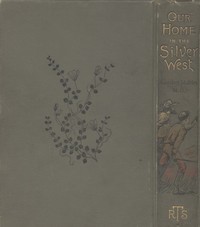
The source record for Our Home in the Silver West: A Story of Struggle and Adventure — Story, Setting & Ideas measures this digital text at 86,405 words, 6 hr 16 min estimated reading time, and 10 detected text sections.
The text analysis averages about 17.7 words per sentence, while the detected sections provide another way to judge how the source is divided.
Project Gutenberg metadata also associates the work with “Frontier and pioneer life -- Argentina -- Juvenile fiction,” connecting these edition facts with the source record’s subject description.
Explore this collection
These alternatives are selected using recorded categories and estimated reading time.
About 363 minutes
Adventure Picaresque Fiction
83,412 recorded words. 13 minutes difference from this book's estimate.
View Gutenberg source #25670About 354 minutes
Adventure Picaresque Fiction
81,363 recorded words. 22 minutes difference from this book's estimate.
View Gutenberg source #37824About 402 minutes
Adventure Picaresque Fiction
92,285 recorded words. 26 minutes difference from this book's estimate.
View Gutenberg source #27906Search stored excerpts and compare books → Choose by your preferences →
Choices use stored catalog measurements. Estimates vary with reading speed. A shared category is a catalog label, not a claim that two books have the same argument or literary quality.
Search reads excerpt text stored with this catalog and links to its associated Gutenberg record. The connection is stored in the site database; this tool does not recheck that every excerpt is word-for-word identical to that external record. Excerpt search does not cover every chapter and does not verify historical publication dates.
Catalog snapshot checked: 2026-09-26. Coverage: 99 public books, 99 available source excerpts.
Calculated from edition completeness, EPUB availability, text structure and catalogue metadata. Not a user rating.
Total of 100 points, scaled to a 2.5-5.0 range. Editions with an empty description or a missing EPUB file are not scored.
Public-domain source text
The source text is kept in the dedicated reader, separate from this catalogue record and its commentary.
The narrative begins not on the pampas but in a Scottish castle tower, where Murdoch M'Crimman questions the drudgery of writing before being interrupted by his aunt. This domestic opening, complete with a meditation on genius and garrets, establishes a voice that is self-aware and slightly ironic—a tone that persists even as the story shifts to the Argentine frontier. The book's structure moves deliberately from the Old World to the New, with the first chapters anchored in Highland feud and boyhood before the family emigrates.
The book is divided into twenty-five chapters, but its architecture is not simply linear. The early chapters (I–V) are set in Scotland, establishing the family's motivations and character through the feud and a terrible ride. Only after this groundwork does the narrative cross the Atlantic, arriving in Argentina around Chapter VI. The middle section (VI–XIV) alternates between travelogue—describing Rio, shopping, and shooting—and settlement, with Moncrieff's experiences providing a mentor figure. The final third (XV–XXV) focuses on building, hunting, and defending the estancia. This three-part structure mirrors the family's physical and psychological journey, each phase marked by a shift in setting and pace.
Recurring images of water and land management give the book a distinctive texture. The irrigation system is described in detail: “the highest of all was very deep and wide, and was supplied with water from the distant hills and river”. This is not mere backdrop; the canals are presented as both practical and beautiful, with trailing flowers and emerald fields. Similarly, the sandhills—initially a menace that “constantly chang[ed] shape and even position with every big storm”—are transformed by sowing wild grass seeds and planting bushes. Moncrieff calls them “mole-hills” turned into “fairy little mountains”. These passages ground the adventure in the concrete work of cultivation, showing how the settlers reshape the land.
When the M'Crimmans choose a location for their home, the decision is driven by defense as much as aesthetics. The elevated plot near a lake is “bounded on two sides by water, which would thus form for it a kind of natural protection in case of Indian invasion”. Moncrieff had already planted trees there, anticipating its future use. This moment encapsulates the book's recurring concern with security: the house is not just a dwelling but a fortification. The careful planning—taking advantage of Moncrieff's experience rather than waiting for their own—reflects a pragmatic approach to frontier life. The narrator's comment that experience “is the best teacher in a' the wide worruld” is immediately undercut by their decision to borrow wisdom from others.
The narrative oscillates between peaceful descriptions of gardens and sudden violence. Chapter titles such as “Attack by Pampa Indians” and “The Last Assault” promise action, but the book devotes equal space to summer idylls and hunting expeditions. This alternation is not haphazard: the calm passages build a sense of home that makes the attacks more threatening. The earthquake chapter (XVII) introduces a natural disaster, broadening the range of dangers beyond human foes. Even within a single chapter, the mood can shift from the comical—a gaucho trying to catch a lasso—to the deadly serious. This movement keeps the reader alert to the precariousness of the settlers' existence.
Readers should attend to the way Stables uses the physical environment—canals, sandhills, house sites—as both setting and symbol. The book's rhythm of construction and crisis gives weight to the settlers' achievements, while the narrator's wry asides prevent the tone from becoming too earnest. The incomplete excerpts leave the full arc of the Indian attacks and the final farewell unclear, but the emphasis on building and adapting suggests a story less about conquest than about making a home.
I keep thinking about that M’Crimman family, how they turned dry ground into something green through sheer patience. It reminded me of another quiet book, The Boy Scouts on the Range — A Reader’s Guide, where the land itself feels like the real character. Some stories just leave you staring out a window afterward, wondering about open spaces.
Use these questions to collect your thoughts before moving on.