About 208 minutes
Sunshine Jane — A Closer Reading
Adventure Picaresque Fiction
47,758 recorded words. 0 minutes difference from this book's estimate.
View Gutenberg source #37972
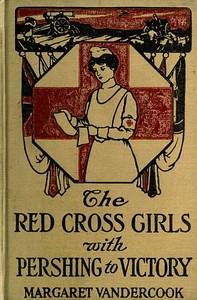
This digital edition of The Red Cross Girls with Pershing to Victory — Inside the Classic is described by source-level measurements including 47,809 words, 3 hr 28 min estimated reading time, and 6 detected text sections.
The text analysis averages about 19.7 words per sentence, while the detected sections provide another way to judge how the source is divided.
Project Gutenberg metadata also associates the work with “Nursing -- Juvenile fiction,” connecting these edition facts with the source record’s subject description.
Explore this collection
These alternatives are selected using recorded categories and estimated reading time.
About 208 minutes
Adventure Picaresque Fiction
47,758 recorded words. 0 minutes difference from this book's estimate.
View Gutenberg source #37972About 190 minutes
Adventure Picaresque Fiction
43,684 recorded words. 18 minutes difference from this book's estimate.
View Gutenberg source #32059About 228 minutes
Adventure Picaresque Fiction
52,281 recorded words. 20 minutes difference from this book's estimate.
View Gutenberg source #36119Search stored excerpts and compare books → Choose by your preferences →
Choices use stored catalog measurements. Estimates vary with reading speed. A shared category is a catalog label, not a claim that two books have the same argument or literary quality.
Search reads excerpt text stored with this catalog and links to its associated Gutenberg record. The connection is stored in the site database; this tool does not recheck that every excerpt is word-for-word identical to that external record. Excerpt search does not cover every chapter and does not verify historical publication dates.
Catalog snapshot checked: 2026-09-26. Coverage: 99 public books, 99 available source excerpts.
Calculated from edition completeness, EPUB availability, text structure and catalogue metadata. Not a user rating.
Total of 100 points, scaled to a 2.5-5.0 range. Editions with an empty description or a missing EPUB file are not scored.
Public-domain source text
The source text is kept in the dedicated reader, separate from this catalogue record and its commentary.
The novel opens not with combat but with its aftermath: a bright winter day near mid-November, the ground hard with frost, and American soldiers relaxing after the armistice. The camp is described with a simile—tents like “innumerable, giant anthills”—and the atmosphere is one of “relaxation, of cheerfulness, of duty accomplished.” A soldier sings to guitar and banjo, and the line “Johnny get your gun, we've the Hun on the run” appears. This opening establishes a mood of suspended anticipation, as troops await orders: home or “The Watch on the Rhine.”
The narrative structure relies on physical movement from one setting to another, each with distinct visual and emotional tones. The first excerpt places readers in the American camp near Château-Thierry, where the quiet after the armistice is so sudden that one soldier remarks it is “almost as hard to grow accustomed” to as the noise of cannon. Later, the scene shifts to Coblenz, Germany, where Sonya Clark waits outside a hospital for her husband. The transition from a tented field to a German city with a fortress “set on a rocky promontory four hundred feet above the river” marks a change from collective military life to more intimate, personal interactions. The flagstaff that once flew the German standard now flies the stars and stripes—a detail that signals occupation without commentary.
Snow appears in both the opening and later scenes. In the first chapter, “light flurries of snow” are in the air over the French countryside. In the Coblenz section, “a light snow was falling” as Sonya and Dr. Clark set out for a New Year’s Eve entertainment. This repetition of snow links the two settings and reinforces a sense of cold, stillness, and waiting. Silence also recurs: after the armistice, the quiet is a new presence; later, Sonya and her husband walk “for several moments in silence” before discussing a personal problem. These details suggest that the characters are navigating not only a changed landscape but also unspoken tensions beneath the surface.
The excerpts show that dialogue often carries the weight of character relationships and unspoken concerns. In the camp, soldiers banter about singing and the absence of cannon fire. In Coblenz, Sonya and Dr. Clark’s conversation reveals a marital dynamic where Sonya senses her husband’s unspoken problem: “I always seem able to feel a something in the atmosphere when you have a problem on your mind.” Dr. Clark admits that when problems are “human,” Sonya is the only person he can turn to, contrasting with the professional competence of Miss Blackstone and himself. This exchange introduces a subplot about Hugh Raymond and Thea Thompson, suggesting that personal entanglements among the Red Cross staff are a recurring concern.
Both excerpts emphasize routine and waiting as structural elements. In the camp, soldiers are “awaiting orders” and passing time with music and cleaning equipment. In Coblenz, Sonya and Dr. Clark have a daily habit of taking walks at four o’clock, and they have a “definite destination” for New Year’s Eve. The narrative moves between these moments of stasis and planned activity. The armistice has ended the noise of war, but the characters remain in a state of suspension—waiting for orders, waiting for the next step, waiting for personal resolutions. This pattern of waiting gives the story a measured pace, punctuated by conversations and small events rather than large-scale action.
Readers may find it useful to pay attention to how Vandercook uses setting and weather to mirror emotional states. The shift from a communal camp to a more confined hospital and city environment also narrows the focus from the war at large to the interpersonal dynamics among the Red Cross workers. The excerpts suggest that the novel is as much about the quiet aftermath of conflict as about the war itself.
There’s something about how Vandercook lets the quiet of snow settle over a story, the war’s noise fading into routine—it reminded me of that same hush I felt reading about a boy alone in the African wilds, where the jungle’s stillness becomes its own kind of character. Guy in the Jungle; Or, A Boy's Adventure in the Wilds of Africa — Reading Notes lingers like that, not in action, but in the after-silence.
Your answers remain private and are stored only in this browser.