About 190 minutes
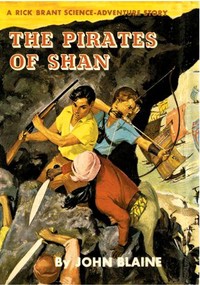
The Pirates of Shan: A Rick Brant Science-Adventure Story — Story, Setting & Ideas
Adventure Picaresque Fiction
43,684 recorded words. 10 minutes difference from this book's estimate.
View Gutenberg source #32059

Before opening The Young Berringtons: The Boy Explorers — Key Ideas to Explore, the edition data offers a quick orientation: 41,225 words, 3 hr estimated reading time, and 4 detected text sections.
The text analysis averages about 20.2 words per sentence, while the detected sections provide another way to judge how the source is divided.
Project Gutenberg metadata also associates the work with “Australia -- Juvenile fiction,” connecting these edition facts with the source record’s subject description.
Explore this collection
These alternatives are selected using recorded categories and estimated reading time.
About 190 minutes
Adventure Picaresque Fiction
43,684 recorded words. 10 minutes difference from this book's estimate.
View Gutenberg source #32059About 208 minutes
Adventure Picaresque Fiction
47,809 recorded words. 28 minutes difference from this book's estimate.
View Gutenberg source #33990About 208 minutes
Adventure Picaresque Fiction
47,758 recorded words. 28 minutes difference from this book's estimate.
View Gutenberg source #37972Search stored excerpts and compare books → Choose by your preferences →
Choices use stored catalog measurements. Estimates vary with reading speed. A shared category is a catalog label, not a claim that two books have the same argument or literary quality.
Search reads excerpt text stored with this catalog and links to its associated Gutenberg record. The connection is stored in the site database; this tool does not recheck that every excerpt is word-for-word identical to that external record. Excerpt search does not cover every chapter and does not verify historical publication dates.
Catalog snapshot checked: 2026-09-26. Coverage: 99 public books, 99 available source excerpts.
Calculated from edition completeness, EPUB availability, text structure and catalogue metadata. Not a user rating.
Total of 100 points, scaled to a 2.5-5.0 range. Editions with an empty description or a missing EPUB file are not scored.
Public-domain source text
The source text is kept in the dedicated reader, separate from this catalogue record and its commentary.
W.H.G. Kingston opens The Young Berringtons with a conversation between brothers Paul and Harry Berrington, who speculate about their English cousins' arrival. The dialogue establishes a clear contrast: the cousins are imagined as "fine young gentlemen" accustomed to luxury, while the Berringtons are practical colonists who ride, shoot, and work. This expository opening, heavy with reported speech, sets up a cultural tension that drives the early chapters. The narrative voice is direct and colloquial, with phrases like "mighty fine young gentlemen" and "great pickles" marking the speakers as informal and self-aware.
The first chapter relies almost entirely on dialogue to convey backstory and character. Paul and Harry's exchange reveals the family situation—Uncle Frank's financial loss, the cousins' expected helplessness—without authorial intrusion. Kingston uses this technique to introduce the colonial setting organically: references to "Moreton Bay," "Ipswich," and "black gin" emerge naturally from the brothers' conversation. The dialogue also establishes a teasing tone, as when Harry predicts the cousins will struggle with rounding up cattle or milking cows. This method of exposition is efficient but risks becoming static; the narrative gains momentum only when action interrupts the talk.
Later excerpts show a marked change in pace and voice. The flood scene in Chapter Eleven is dominated by urgent, short sentences and physical detail: "The water was almost up to their knees," "the water hissing and foaming at their heels." Kingston shifts from reported speech to direct commands and exclamations—"Come down! come down!"—and the narration becomes more visceral, describing the house shaking and the wave roaring. The contrast between the earlier conversational tone and this breathless action is stark. Notably, the cousins Hector and Reggy are now present, and their inexperience (Hector's hesitation, his fear of climbing) becomes a source of tension rather than comedy.
Throughout the excerpts, Kingston anchors the story in specific, recurring details of Australian frontier life: the "piggeries," the "black gin," the "ladder" used to climb trees, and the "hens" whose wings are cut to prevent straying. These details are not merely decorative; they function as markers of the settlers' practical knowledge. Harry's quick thinking—pointing to a tree with "numerous pendants" that has taken root—reflects an understanding of the environment that the English cousins lack. The flood itself is described with a catalog of losses: cattle, a cow caught in boughs, the house carried away. Kingston's voice becomes almost documentary in these passages, listing what is destroyed with a matter-of-factness that underscores the harshness of colonial existence.
Readers should attend to how Kingston modulates his narrative voice between the colloquial, dialogue-heavy opening and the terse, action-driven later chapters. The flood scene, in particular, reveals his skill at building suspense through short clauses and sensory detail. The recurring contrast between the Berringtons' competence and the cousins' vulnerability is not merely thematic but structural, shaping the novel's rhythm. This edition invites comparison between the leisurely exposition of the first chapter and the compressed urgency of the crisis, highlighting Kingston's range as a storyteller of colonial adventure.
There’s something about how that old Kingston tale lingers—the way those cousins get tested by storms and empathy, not just maps. It reminded me of another quiet ache I carried after finishing The Fight for Constantinople: A Story of the Gallipoli Peninsula — Background and Themes, where the land itself feels like the stubbornest character of all.
Answer a few questions and save a private reflection on this device.