About 307 minutes
The Confessions of Arsène Lupin — Story, Setting & Ideas
Science Fiction Utopias
70,527 recorded words. 9 minutes difference from this book's estimate.
View Gutenberg source #28093
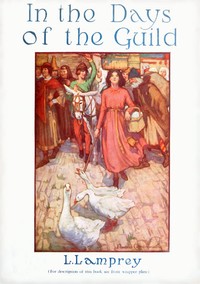
Before opening In the Days of the Guild — Story, Setting & Ideas, the edition data offers a quick orientation: 72,641 words, 5 hr 16 min estimated reading time, and 8 detected text sections.
The text analysis averages about 19.7 words per sentence, while the detected sections provide another way to judge how the source is divided.
Project Gutenberg metadata also associates the work with “Middle Ages -- Juvenile fiction,” connecting these edition facts with the source record’s subject description.
Explore this collection
These alternatives are selected using recorded categories and estimated reading time.
About 307 minutes
Science Fiction Utopias
70,527 recorded words. 9 minutes difference from this book's estimate.
View Gutenberg source #28093About 304 minutes
Science Fiction Utopias
69,834 recorded words. 12 minutes difference from this book's estimate.
View Gutenberg source #30372About 336 minutes
Science Fiction Utopias
77,221 recorded words. 20 minutes difference from this book's estimate.
View Gutenberg source #32596Search stored excerpts and compare books → Choose by your preferences →
Choices use stored catalog measurements. Estimates vary with reading speed. A shared category is a catalog label, not a claim that two books have the same argument or literary quality.
Search reads excerpt text stored with this catalog and links to its associated Gutenberg record. The connection is stored in the site database; this tool does not recheck that every excerpt is word-for-word identical to that external record. Excerpt search does not cover every chapter and does not verify historical publication dates.
Catalog snapshot checked: 2026-09-26. Coverage: 99 public books, 99 available source excerpts.
Calculated from edition completeness, EPUB availability, text structure and catalogue metadata. Not a user rating.
Total of 100 points, scaled to a 2.5-5.0 range. Editions with an empty description or a missing EPUB file are not scored.
Public-domain source text
The source text is kept in the dedicated reader, separate from this catalogue record and its commentary.
Louise Lamprey's In the Days of the Guild opens not with a king or a battle, but with a boy polishing a copper plate in a kitchen. This choice signals the book's persistent focus on the hands-on work of medieval craftspeople. The narrative voice is direct and concrete, describing how Giovanni 'silently and deftly finished beating his pastry' and 'stood over them as they cooled.' Lamprey builds tension through physical action and dialogue, as when the cook Beppo 'dashed it furiously to the ground' and 'seized him as if to search for the spices.' The language is plain but vivid, avoiding romanticized medievalism in favor of a practical, almost documentary style.
Lamprey's word choices consistently ground the narrative in tangible labor. Verbs like 'scour,' 'polish,' 'beat,' 'roll,' and 'pack' appear frequently, each tied to a specific craft. In the excerpt, Giovanni's actions are described with precision: he 'finished beating his pastry, added the spice, rolled out the dough, began the baking.' The cook's fury is rendered through physical verbs—'dashed,' 'seized,' 'shrieked'—that make the confrontation immediate. This lexical field of manual work extends beyond the kitchen; the table of contents promises stories about shoemaking, goldsmithing, weaving, and wood-carving, each likely employing similarly exact vocabulary. Lamprey avoids generic descriptions of 'hard work' in favor of naming the specific motions and materials of each trade.
Dialogue in the excerpt serves both to reveal character and to advance the plot. Mary Lavender's speech is straightforward and trusting: 'Those are beautiful cakes, Vanni. I am sure they are fit for the King.' Beppo's lines are punctuated with exclamations and repetitions—'What? What?' and 'Where are my spices?'—that convey his volatile temper. Giovanni's responses are terse and defiant: 'I used good spice,' he says firmly, and later 'I sent that packet of spice to Master Tomaso an hour ago.' The contrast between Mary's naivety, Beppo's bluster, and Giovanni's quiet competence is established almost entirely through their spoken words. Lamprey also uses dialogue to deliver exposition naturally, as when Tomaso explains the poison plot: 'It was a subtle device. The spice would disguise the flavor.'
The book is organized into twenty-one chapters, each with a title like 'The Boy with the Woolpack' or 'The Picture in the Window,' followed by a subtitle that summarizes the story. This structure suggests a series of self-contained episodes linked by the theme of guild life. The excerpt comes from Chapter XII, 'Concealed Weapons,' which focuses on a poison plot involving a baker-boy and a physician. The narrative moves briskly from the kitchen confrontation to the resolution, with Tomaso's calm intervention and the Queen's tearful denial. This episodic approach allows Lamprey to explore different trades and settings—from a Sussex farm to a London fair—without committing to a single protagonist. The repeated pattern of a young person facing a moral or practical challenge and overcoming it through skill or honesty gives the book a cumulative didactic weight.
Small, repeated details anchor the excerpt in a world where cleanliness and trust are paramount. Giovanni's first line is about scouring dishes: 'Things cannot be too clean.' The spice packet becomes a test of character: Beppo assumes Giovanni stole it, but Giovanni has sent it to Tomaso for testing. The motif of testing—of food, of loyalty, of skill—runs through the passage. Mary's simple question, 'Did you use the spice I gave you?' triggers the climax. Lamprey uses these concrete objects (copper plates, spice packets, cakes) to embody abstract values like honesty and diligence. The poison plot itself hinges on a 'subtle device' that 'would disguise the flavor,' making the sense of taste—and its betrayal—central to the drama. These recurring details create a cohesive sensory world where moral choices have tangible consequences.
Readers approaching In the Days of the Guild should attend to the way Lamprey builds each story around a specific craft or trade. The language rewards close attention to verbs and objects, while the dialogue often carries the weight of character and conflict. Because the book is episodic, it can be read in any order, though the cumulative effect of seeing different trades through similar patterns of apprenticeship and trial is part of its design. The excerpts suggest a work that values practical knowledge and moral clarity over historical spectacle.
That rainy afternoon, I kept turning pages of In the Days of the Guild, noticing how the shoemaker’s quiet pride in a well-stitched seam felt more like prayer than work. Later, idly shelving books, my hand paused on Eight Cousins; Or, The Aunt-Hill — Edition Insights, and I remembered that same gentle thoroughness—how careful tending, whether of leather or of a girl’s lonely heart, changes everything slowly.
Build a private reading journal entry for this title.