About 208 minutes
The Red Cross Girls with Pershing to Victory — Inside the Classic
Adventure Picaresque Fiction
47,809 recorded words. 0 minutes difference from this book's estimate.
View Gutenberg source #33990
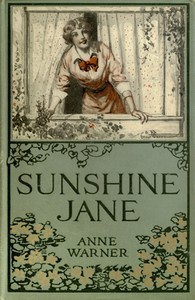
Before opening Sunshine Jane — A Closer Reading, the edition data offers a quick orientation: 47,758 words, 3 hr 28 min estimated reading time, and 5 detected text sections.
The text analysis averages about 12.8 words per sentence, while the detected sections provide another way to judge how the source is divided.
Project Gutenberg metadata also associates the work with “Bildungsromans,” connecting these edition facts with the source record’s subject description.
Explore this collection
These alternatives are selected using recorded categories and estimated reading time.
About 208 minutes
Adventure Picaresque Fiction
47,809 recorded words. 0 minutes difference from this book's estimate.
View Gutenberg source #33990About 190 minutes
Adventure Picaresque Fiction
43,684 recorded words. 18 minutes difference from this book's estimate.
View Gutenberg source #32059About 228 minutes
Adventure Picaresque Fiction
52,281 recorded words. 20 minutes difference from this book's estimate.
View Gutenberg source #36119Search stored excerpts and compare books → Choose by your preferences →
Choices use stored catalog measurements. Estimates vary with reading speed. A shared category is a catalog label, not a claim that two books have the same argument or literary quality.
Search reads excerpt text stored with this catalog and links to its associated Gutenberg record. The connection is stored in the site database; this tool does not recheck that every excerpt is word-for-word identical to that external record. Excerpt search does not cover every chapter and does not verify historical publication dates.
Catalog snapshot checked: 2026-09-26. Coverage: 99 public books, 99 available source excerpts.
Calculated from edition completeness, EPUB availability, text structure and catalogue metadata. Not a user rating.
Total of 100 points, scaled to a 2.5-5.0 range. Editions with an empty description or a missing EPUB file are not scored.
Public-domain source text
The source text is kept in the dedicated reader, separate from this catalogue record and its commentary.
The novel opens with a stagecoach lumbering into a village whose inhabitants are serenely unaware of impending change. Warner immediately establishes a collective viewpoint—Old Mrs. Croft, paralyzed for twenty years, has no idea of the part she will play; Katie Croft dreams of freedom; Emily Mead wishes for 'just one real man.' This omniscient sweep, listing characters by their private longings, sets a tone of benevolent irony. The prose moves from broad, almost theatrical exposition to sharp, intimate dialogue: Jane's first exchange with her aunt Susan reveals her mission to 'sunshine' people, while Mrs. Croft's shrieks and rapid shifts from complaint to theatrical grief showcase Warner's ear for vocal extremes.
Warner builds the village through layered, contrasting voices. The opening chapter catalogues residents by their secret desires—Mrs. Cowmull awaits an artist, Miss Debby Vane anticipates a cousin's love affair—in a style that feels almost choral. Each character speaks in a distinct register: Susan's practical alarm, Mrs. Croft's wild exclamations ('The handwriting is on the wall and the Medes and Persians is in the chicken yard right now'), and Jane's calm, firm interjections. The dialogue often interrupts narrative summary, creating a rhythm of expectation and deflation. When Jane tells Susan she intends to 'sunshine' Mrs. Croft, Susan's appalled reply—'Surely you don't expect to sunshine her up, do you?'—captures the comic tension between Jane's idealism and the town's skepticism. Warner rarely lets a single voice dominate; even in scenes focused on one character, others break in with questions or asides.
The narrative alternates between brisk, almost farcical exchanges and slower, reflective passages. Early scenes move rapidly: the stagecoach arrival, the flurry of introductions, Mrs. Croft's screaming fits. But Warner also lingers on quiet moments—Jane's firm hand on Mrs. Croft's arm, the 'scared face' Susan turns toward Jane after the outburst. These pauses give weight to the emotional undercurrents. The description of Mrs. Croft's isolation—'It's very bad to shut one's self off from others'—is delivered in Jane's soothing tone, but the preceding chaos makes the observation land with force. Warner uses physical details to mark tempo: a clenched fist under bedclothes, a lock of chestnut hair pushed back impatiently. These small gestures slow the reader, inviting attention to the body's language amid the verbal noise.
The provided excerpts cover only the opening and a middle scene involving Mrs. Croft. The full arc of Jane's 'sunshining' project—its successes, failures, and costs—remains unknown. The catalog lists themes of first love and religion, but the excerpts show no romantic development or philosophical debate; Emily Mead's wish for 'one real man' is the sole hint of a love plot. Similarly, the title character's methods are glimpsed only through her calm responses and the word 'sunshining,' which Susan treats as a novel concept. Readers should approach the novel expecting a comedy of village manners with a potentially earnest core, but the excerpts do not reveal whether Jane's optimism transforms the town or meets resistance. The narrative voice, however, consistently balances irony with sympathy, suggesting a work that treats its characters' foibles with humor and care.
Warner's prose rewards attention to its shifts in register—from the stagecoach's 'freight of portent' to Mrs. Croft's raw, funny outbursts. The novel's title promises a central philosophy, but the excerpts show that philosophy tested by stubborn, vivid personalities. Readers may find pleasure in tracking how Warner modulates between collective and individual voices, and in watching whether Jane's calm can hold against the village's noise.
Jane’s bright insistence on happiness had me thinking about how we carry that stubborn light into unknown places, like childhood maps drawn with hope. That feeling surfaced again with The Young Berringtons: The Boy Explorers — Key Ideas to Explore, where the same quiet courage nudges every step into the woods. One story’s village, another’s frontier—still, the glow feels familiar, somehow.
Answer a few questions and save a private reflection on this device.