About 308 minutes
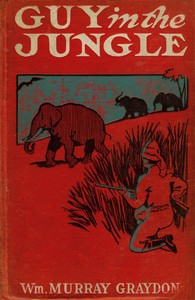
Guy in the Jungle; Or, A Boy's Adventure in the Wilds of Africa — Reading Notes
Adventure Picaresque Fiction
70,611 recorded words. 18 minutes difference from this book's estimate.
View Gutenberg source #32329
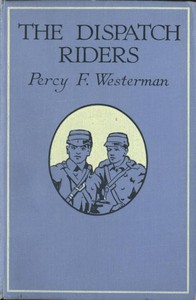
The Dispatch-Riders: The Adventures of Two British Motor-cyclists in the Great War — Context and Discussion can be approached with a clearer sense of reading commitment from its source measurements: 74,922 words, 5 hr 26 min estimated reading time, and 10 detected text sections.
The text analysis averages about 14.8 words per sentence, while the detected sections provide another way to judge how the source is divided.
Project Gutenberg metadata also associates the work with “Adventure stories,” connecting these edition facts with the source record’s subject description.
Explore this collection
These alternatives are selected using recorded categories and estimated reading time.
About 308 minutes
Adventure Picaresque Fiction
70,611 recorded words. 18 minutes difference from this book's estimate.
View Gutenberg source #32329About 354 minutes
Adventure Picaresque Fiction
81,363 recorded words. 28 minutes difference from this book's estimate.
View Gutenberg source #37824About 290 minutes
Adventure Picaresque Fiction
66,595 recorded words. 36 minutes difference from this book's estimate.
View Gutenberg source #37102Search stored excerpts and compare books → Choose by your preferences →
Choices use stored catalog measurements. Estimates vary with reading speed. A shared category is a catalog label, not a claim that two books have the same argument or literary quality.
Search reads excerpt text stored with this catalog and links to its associated Gutenberg record. The connection is stored in the site database; this tool does not recheck that every excerpt is word-for-word identical to that external record. Excerpt search does not cover every chapter and does not verify historical publication dates.
Catalog snapshot checked: 2026-09-26. Coverage: 99 public books, 99 available source excerpts.
Calculated from edition completeness, EPUB availability, text structure and catalogue metadata. Not a user rating.
Total of 100 points, scaled to a 2.5-5.0 range. Editions with an empty description or a missing EPUB file are not scored.
Public-domain source text
The source text is kept in the dedicated reader, separate from this catalogue record and its commentary.
The novel opens not with a declaration of war but with a casual dispute over travel routes: Kenneth proposes Liège, Rollo objects to its 'horrible pavé.' This mundane argument, set at a hotel window in Dinant, immediately establishes the two friends as motorcyclists whose chief concern is road quality. The war intrudes gradually, and the narrative voice shifts from holiday banter to the clipped, urgent exchanges of men under fire. Westerman builds tension through physical constraints—a broken-down motorcycle, a collapsed cellar, a missing match—rather than through grand strategy. The reader is placed inside the same darkness and thirst as the protagonists, with only a 'small glimmer of light' to guide them.
Motorcycles are not mere transport; they are fragile, temperamental characters. The novel’s first chapter is titled 'A Break-Down,' and the pattern recurs: machines fail at critical moments, forcing the riders to improvise. When Kenneth and Rollo are entombed in a cellar, their thirst is compounded by a shell fragment that punctures their water bucket—a detail that echoes the earlier mechanical failures. Westerman uses these breakdowns to isolate his heroes, stripping away their mobility and leaving them dependent on wit and physical endurance. The motorcycles themselves are never described in technical depth; instead, their absence or malfunction becomes a source of peril. This focus on mechanical vulnerability distinguishes the book from more romanticized war adventures.
The longest sustained excerpt places Kenneth and Rollo in a collapsed cellar, buried alive. Their conversation here is revealing: they bicker, then check themselves ('don't let us start quarrelling'), and debate whether to shout for help or tunnel out. The dialogue is taut, almost claustrophobic, with each line weighed against the risk of detection. Westerman limits their sensory world to sound and touch—the 'dull grinding of debris,' the feel of rubble. The decision to remain silent hinges on a single 'gleam of a lantern' that suggests a possible escape route. This scene, which occupies several pages, shows the author’s willingness to slow the pace for psychological pressure, a technique more common in adult thrillers than juvenile fiction of the period.
German soldiers appear primarily as Uhlans—lancers—whose patrols create a persistent, mobile danger. In the cellar scene, the threat is not combat but the search: heavy boots overhead, guttural voices, the risk of being dug out and shot. Westerman emphasizes the arbitrary nature of survival: the Germans find evidence of dead Belgians and leave, unaware of the two British riders. The enemy is not demonized in these passages; they are methodical, noisy, and ultimately fallible. This treatment contrasts with the book’s title and cover, which promise straightforward adventure. The excerpts suggest a more nuanced portrayal of danger, where the greatest threat is not a pitched battle but the slow, grinding possibility of being overlooked or misidentified.
Readers should attend to the novel’s handling of time: the action is compressed into days, but the narrative lingers on moments of enforced stillness. The dispatch riders are often waiting—for dawn, for rescue, for orders—and Westerman uses these pauses to develop character through friction. The book rewards attention to small physical details: a missing match, a punctured bucket, the sound of subsiding rubble. These are not mere color but the hinges on which the plot turns.
That rainy afternoon, The Dispatch-Riders kept me company, its mud-splashed petrol and entombment in ditches oddly comforting. The boys’ frantic escapes made my own stillness feel profound. Later, idly, I picked up The Boy Scouts on the Range — A Reader’s Guide, and found the same quiet theme—open country, sudden peril, the solitariness of being young. One story just seemed to lean into the other, like books do.
Answer a few questions and save a private reflection on this device.