About 273 minutes
Dickens' London — Edition Insights
Adventure Picaresque Fiction
62,779 recorded words. 3 minutes difference from this book's estimate.
View Gutenberg source #30390
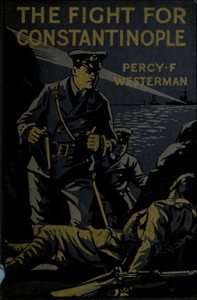
The Fight for Constantinople: A Story of the Gallipoli Peninsula — Background and Themes can be approached with a clearer sense of reading commitment from its source measurements: 62,020 words, 4 hr 30 min estimated reading time, and 8 detected text sections.
The text analysis averages about 16.9 words per sentence, while the detected sections provide another way to judge how the source is divided.
Project Gutenberg metadata also associates the work with “Adventure stories,” connecting these edition facts with the source record’s subject description.
Explore this collection
These alternatives are selected using recorded categories and estimated reading time.
About 273 minutes
Adventure Picaresque Fiction
62,779 recorded words. 3 minutes difference from this book's estimate.
View Gutenberg source #30390About 282 minutes
Adventure Picaresque Fiction
64,841 recorded words. 12 minutes difference from this book's estimate.
View Gutenberg source #24502About 290 minutes
Adventure Picaresque Fiction
66,595 recorded words. 20 minutes difference from this book's estimate.
View Gutenberg source #37102Search stored excerpts and compare books → Choose by your preferences →
Choices use stored catalog measurements. Estimates vary with reading speed. A shared category is a catalog label, not a claim that two books have the same argument or literary quality.
Search reads excerpt text stored with this catalog and links to its associated Gutenberg record. The connection is stored in the site database; this tool does not recheck that every excerpt is word-for-word identical to that external record. Excerpt search does not cover every chapter and does not verify historical publication dates.
Catalog snapshot checked: 2026-09-26. Coverage: 99 public books, 99 available source excerpts.
Calculated from edition completeness, EPUB availability, text structure and catalogue metadata. Not a user rating.
Total of 100 points, scaled to a 2.5-5.0 range. Editions with an empty description or a missing EPUB file are not scored.
Public-domain source text
The source text is kept in the dedicated reader, separate from this catalogue record and its commentary.
Sub-lieutenant Dick Crosthwaite's first reaction to his appointment to HMS Hammerer is disappointment: he had hoped for something "not altogether approaching the scrap-iron stage." The novel opens by grounding its hero in the technical specifics of his new command—a battleship launched in 1895, of 14,900 tons, with four 12-inch guns—and in the strategic frustrations of the North Sea patrol. But the action soon shifts to the Dardanelles, where the Hammerer and her crew face a different kind of warfare. Westerman balances naval detail with ground-level reconnaissance, as Dick and a midshipman, disguised as German officers, infiltrate Turkish trenches and observe the defenses firsthand.
The early chapters establish a tension between expectation and reality. Dick's father, a colonel, hands him his "marching orders" with a telegram; the son's breezy laugh conceals a "shade of disappointment." Westerman uses this moment to contrast the home-front view of the war—where the Hammerer is seen as a "weatherly old craft" unlikely to see action—with the actual dangers of the Mediterranean campaign. The novel does not dwell on the North Sea; instead, it quickly moves the Hammerer to the Dardanelles, where the ship's age becomes less relevant than the crew's resourcefulness. Dick's encyclopedic knowledge of naval vessels, displayed when he recites the Hammerer's specifications from memory, marks him as a protagonist whose competence will be tested not in a fleet engagement but in close-quarters reconnaissance and escape.
Dick's most extended sequence of action takes place after he and Midshipman Farnworth are captured and escape in disguise. The excerpts show Westerman's interest in the physical details of the Gallipoli defenses: the trenches are "extraordinarily deep and narrow," and machine-guns are placed "roughly, one to every five yards," each protected by a "heavy V-shaped shield." The narrative slows to allow Dick to mount the parapet and survey the Turkish positions, noting how the defenders have "thoroughly mastered the principles of modern warfare under European conditions." The escape itself is a catalogue of practical problems—hunger, the need to avoid searchlights, the sound of a camel convoy passing within fifty feet. Westerman treats the landscape as a series of tactical puzzles rather than a backdrop for heroics.
Westerman's prose is brisk and expository, favoring technical description over interior reflection. Dialogue is functional: Dick's father interrupts him with "Of course" and the maxim "That's duty all the world over." The novel's structure follows a pattern of assignment, action, captivity, and escape, with the Gallipoli campaign serving as a setting for set-piece adventures rather than a continuous narrative. The chapter titles—"Trapped in The Magazine," "A Dash up The Narrows," "The German Submarine"—advertise discrete episodes. What holds the story together is the consistent focus on material details: the weight of a ship, the depth of a trench, the distance to Kum Kale. Westerman trusts that the reader, like Dick, will find interest in the specifics of how things work and how men move through a war zone.
Readers should attend to the way Westerman uses technical information—ship tonnages, gun calibers, trench dimensions—not as decoration but as the substance of his characters' world. The novel rewards attention to how problems are solved: how a submarine is spotted, how a disguise is maintained, how a camel convoy is avoided. The Gallipoli setting is rendered with enough specificity to ground the adventure, even if the larger strategic picture remains in the background.
There’s a moment in The Fight for Constantinople where Dick's patrol slips through scrub, more about watching than fighting. It made me think of those quieter stretches in The Boy Scouts on the Range — A Reader’s Guide—the feeling of open ground holding its breath. Both share that patient, observant pulse, the landscape doing the talking while boys simply move through it. Odd, how a peninsula and a prairie can feel so alike.
Build a private reading journal entry for this title.