About 242 minutes
The Young Bank Messenger — Context and Discussion
Science Fiction Utopias
55,559 recorded words. 9 minutes difference from this book's estimate.
View Gutenberg source #25150
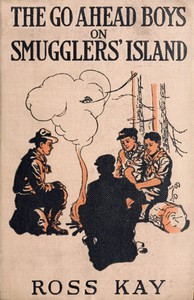
The Go Ahead Boys on Smugglers' Island — Story, Setting & Ideas can be approached with a clearer sense of reading commitment from its source measurements: 53,515 words, 3 hr 53 min estimated reading time, and 8 detected text sections.
The text analysis averages about 14.2 words per sentence, while the detected sections provide another way to judge how the source is divided.
Project Gutenberg metadata also associates the work with “Islands -- Juvenile fiction,” connecting these edition facts with the source record’s subject description.
Explore this collection
These alternatives are selected using recorded categories and estimated reading time.
About 242 minutes
Science Fiction Utopias
55,559 recorded words. 9 minutes difference from this book's estimate.
View Gutenberg source #25150About 217 minutes
Science Fiction Utopias
49,748 recorded words. 16 minutes difference from this book's estimate.
View Gutenberg source #37911About 262 minutes
Science Fiction Utopias
60,145 recorded words. 29 minutes difference from this book's estimate.
View Gutenberg source #33409Search stored excerpts and compare books → Choose by your preferences →
Choices use stored catalog measurements. Estimates vary with reading speed. A shared category is a catalog label, not a claim that two books have the same argument or literary quality.
Search reads excerpt text stored with this catalog and links to its associated Gutenberg record. The connection is stored in the site database; this tool does not recheck that every excerpt is word-for-word identical to that external record. Excerpt search does not cover every chapter and does not verify historical publication dates.
Catalog snapshot checked: 2026-09-26. Coverage: 99 public books, 99 available source excerpts.
Calculated from edition completeness, EPUB availability, text structure and catalogue metadata. Not a user rating.
Total of 100 points, scaled to a 2.5-5.0 range. Editions with an empty description or a missing EPUB file are not scored.
Public-domain source text
The source text is kept in the dedicated reader, separate from this catalogue record and its commentary.
The Go Ahead Boys on Smugglers' Island opens not with a chase but with a sunrise conversation about the quality of the air on Mackinac Island. The boys' banter—'you can almost bite it off'—establishes a voice that is colloquial and alert, more concerned with the texture of experience than with plot mechanics. The preface by Ross Kay states that incidents are based on actual Treasury Department correspondence, and the letters in the story resemble those received by official agents. This grounding in documentary detail gives the fictional smuggling plot an unusual specificity, even as the narrative remains squarely within the juvenile adventure tradition.
The dialogue in the excerpts is notably free of period slang or forced excitement. When Fred says, 'What's the use of going any farther? Let's go back and take our skiff,' the sentence is plain and practical. The boys do not exclaim or moralize; they assess. The anonymous letter reproduced in the text is similarly blunt: 'I only want two things. 1st. My ticket to Montreal and back. 2nd. My passage to Europe by way of the Azores Isles.' The writer demands no money, only passage, and promises to deliver 'this gang which rob United States of thousands of dollars each year.' The clipped, numbered style contrasts with the boys' relaxed speech, creating a tonal friction that hints at the story's dual interest in leisure and law enforcement.
The catalog subjects list 'Islands -- Juvenile fiction' and 'Canada -- Juvenile fiction,' and the excerpts bear this out with precise geography. The boys name Mackinac, Cockburn Island, Drummond Island, and Western Duck Island, and they measure distances—'forty miles from Mackinac.' The islands are not exotic backdrops but practical problems: a missing skiff, a mysterious sail left on shore, a motor-boat that vanishes. When John and Fred rig a leg-of-mutton sail on Western Duck Island, their discussion of wind and heading is matter-of-fact. The setting is treated as a navigable space, not a fantasy realm. The preface's claim that 'changes in characters and localities have been freely made' suggests that the real geography is deliberately adapted, not invented wholesale.
One of the most effective details in the excerpts is the unexplained sail and mast found thrown across the boys' skiff. John asks, 'Where did they come from?' and Fred replies, 'I don't know any more about it than you do.' The narrative does not immediately resolve the mystery; instead, the boys accept the gift and use it. This moment of unearned assistance—a sail appearing without a donor—is typical of adventure fiction, but Kay handles it with a light touch. The boys do not dwell on the provenance; they rig the sail and set off. The reader is left to wonder whether the sail was left by a friend, a stranger, or perhaps by the smugglers themselves. The lack of explanation, at least in these excerpts, creates a small but effective gap in the story's logic, inviting speculation without breaking the forward momentum.
Readers coming to this book expecting a straightforward smuggling chase will find instead a story that lingers on the texture of a summer morning and the practicalities of small-boat navigation. The excerpts suggest that Kay's interest lies less in the mechanics of crime than in the boys' resourcefulness and their casual, observant dialogue. The preface's moral—that defrauding the government 'reacts in harsher form' on the offender—is stated plainly, but the story itself seems more concerned with how the boys respond to uncertainty than with delivering a lesson. Approach the book as a period piece of American outdoor adventure, with a documentary thread running beneath the surface.
There’s something about those lads tackling Smugglers’ Island, their boat slipping into fog and letters half-read, that left me wistful for a quieter code of honor. It reminded me of another time, guilds and craftsmen shaping their world by hand, where loyalty meant something solid. I found myself reaching for In the Days of the Guild — Story, Setting & Ideas afterwards, just to sit with that feeling a little longer.
Your answers remain private and are stored only in this browser.