About 296 minutes
The Rover Boys in the Land of Luck; Or, Stirring Adventures in the Oil Fields — Context and Discussion
Fantasy Juvenile Worlds
68,029 recorded words. 3 minutes difference from this book's estimate.
View Gutenberg source #30841

For the School Colours — A Closer Reading can be approached with a clearer sense of reading commitment from its source measurements: 68,704 words, 4 hr 59 min estimated reading time, and 7 detected text sections.
The text analysis averages about 13.8 words per sentence, while the detected sections provide another way to judge how the source is divided.
Project Gutenberg metadata also associates the work with “Friendship -- Juvenile fiction,” connecting these edition facts with the source record’s subject description.
Explore this collection
These alternatives are selected using recorded categories and estimated reading time.
About 296 minutes
Fantasy Juvenile Worlds
68,029 recorded words. 3 minutes difference from this book's estimate.
View Gutenberg source #30841About 302 minutes
Fantasy Juvenile Worlds
69,326 recorded words. 3 minutes difference from this book's estimate.
View Gutenberg source #33263About 303 minutes
Fantasy Juvenile Worlds
69,577 recorded words. 4 minutes difference from this book's estimate.
View Gutenberg source #32524Search stored excerpts and compare books → Choose by your preferences →
Choices use stored catalog measurements. Estimates vary with reading speed. A shared category is a catalog label, not a claim that two books have the same argument or literary quality.
Search reads excerpt text stored with this catalog and links to its associated Gutenberg record. The connection is stored in the site database; this tool does not recheck that every excerpt is word-for-word identical to that external record. Excerpt search does not cover every chapter and does not verify historical publication dates.
Catalog snapshot checked: 2026-09-26. Coverage: 99 public books, 99 available source excerpts.
Calculated from edition completeness, EPUB availability, text structure and catalogue metadata. Not a user rating.
Total of 100 points, scaled to a 2.5-5.0 range. Editions with an empty description or a missing EPUB file are not scored.
Public-domain source text
The source text is kept in the dedicated reader, separate from this catalogue record and its commentary.
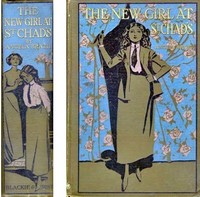
The story opens with a burst of indignation: Laura, Janet, and Ethelberga react to the news that Hawthorn House girls are to be merged into their form. Their slangy, emphatic protests—'It's the limit!' and 'Gives me nerve shock!'—set a tone of bristling school loyalty. Angela Brazil quickly establishes a world where friendships and rivalries are declared in strong, colloquial terms, and where the headmistress's decisions can feel like personal betrayals.
Alongside this school plot, a separate thread emerges when Avelyn stumbles upon a tense scene at Moss Cottage. Pamela's frightened whisper, her uncle's bullying tone, and the image of a linnet caught in a net all hint at a hidden conflict far from the classroom. The excerpts suggest that Brazil weaves together two kinds of tension: the open, vocal battles of schoolgirl politics and the quieter, more dangerous secrets of home life.
The dialogue in the opening chapter is notably vivid and collective. Laura, Janet, and Ethelberga speak almost as a chorus, finishing each other's sentences and reinforcing shared outrage. Their language is colloquial and emphatic: 'Crystal clear, I would.' This shared voice creates a sense of a tight-knit group that defines itself partly by opposition to outsiders—in this case, the incoming Hawthorners. Brazil uses this technique to show how schoolgirl alliances are formed and expressed through talk.
Later, Avelyn and her brothers David and Anthony adopt a different tone—more cautious, analytical. David calls the mystery his first 'case' and insists on gathering evidence before acting. The contrast between the girls' open indignation and the boys' strategic silence suggests that Brazil is exploring different codes of loyalty: one based on vocal solidarity, the other on secret investigation.
Mr. Hockheimer, Pamela's uncle, is the only adult who appears in a sustained scene in the excerpts, and he is portrayed as a bully. His words—'Do you think I feed you and educate you for you to do just as you like?'—carry a menacing tone that contrasts sharply with the school's world of rules and friendships. Pamela describes herself as a 'little wild linnet' caught in a net, and her mother is depicted as 'absolutely trusting and unsuspicious', leaving Pamela isolated.
This adult threat is also linked to wartime suspicion: the boys refer to Mr. Hockheimer as 'that old Hun', and Avelyn recalls 'what we saw in the wood'. Brazil thus introduces a layer of national tension into the personal drama, suggesting that the mystery may involve espionage or disloyalty beyond the school gates. The stable scene, with Avelyn crouched under the manger, is a striking image of hidden observation and power imbalance.
Throughout the excerpts, characters repeatedly choose not to share information. Pamela refuses to tell Avelyn her secret, saying 'I want to think it over.' David warns Avelyn not to 'blab' to the vicar. Even the initial school conflict is framed as a surprise sprung by Miss Thompson, who 'never let out so much as a teeny-weeny hint'. Brazil builds a narrative around withheld knowledge and the tension it creates.
This pattern of secrecy raises questions about whom to trust. Pamela trusts Avelyn enough to ask for help later, but not enough to explain now. The boys trust only themselves. The schoolgirls trust each other in their complaints but not the headmistress. Brazil seems to be examining how loyalty is tested when information is scarce, and how characters must decide when to speak and when to stay silent—a theme that would resonate in a wartime setting where discretion could be a matter of safety.
Readers should pay close attention to the way Brazil uses setting to mirror emotional states: the stable's darkness and the wood's secrecy contrast with the open, noisy school corridors. The recurring image of nets and traps—the linnet, the 'meshes'—suggests that the characters are navigating systems of control they cannot fully see. The excerpts offer only fragments of the larger plot, but they establish a world where every conversation might carry a hidden meaning, and where the line between friend and enemy is drawn not just between schools but within families.
That quiet ache for little Avelyn, figuring out where she belongs among shifting schoolrooms and hidden troubles, lingers. I remembered it reading how Dorothy and her friends navigate their own gentle mountainside mix of joys and small trials. Something so comforting about those quiet, old-school loyalties. Dorothy Dainty at the Mountains — Text and Context feels like holding a warm cup of tea after a long day, a soft reminder of courage found in simple kindness.
Build a private reading journal entry for this title.