About 213 minutes
Polly of Lady Gay Cottage — Edition Insights
Historical Psychological Social Fiction
48,835 recorded words. 4 minutes difference from this book's estimate.
View Gutenberg source #29088
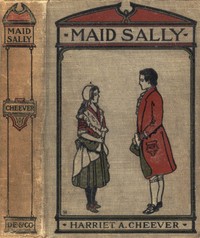
This digital edition of Maid Sally — A Reader’s Guide is described by source-level measurements including 47,968 words, 3 hr 29 min estimated reading time, and 7 detected text sections.
The text analysis averages about 18.7 words per sentence, while the detected sections provide another way to judge how the source is divided.
Project Gutenberg metadata also associates the work with “Girls -- Juvenile fiction,” connecting these edition facts with the source record’s subject description.
Explore this collection
These alternatives are selected using recorded categories and estimated reading time.
About 213 minutes
Historical Psychological Social Fiction
48,835 recorded words. 4 minutes difference from this book's estimate.
View Gutenberg source #29088About 219 minutes
Historical Psychological Social Fiction
50,167 recorded words. 10 minutes difference from this book's estimate.
View Gutenberg source #27096About 231 minutes
Historical Psychological Social Fiction
52,925 recorded words. 22 minutes difference from this book's estimate.
View Gutenberg source #28331Search stored excerpts and compare books → Choose by your preferences →
Choices use stored catalog measurements. Estimates vary with reading speed. A shared category is a catalog label, not a claim that two books have the same argument or literary quality.
Search reads excerpt text stored with this catalog and links to its associated Gutenberg record. The connection is stored in the site database; this tool does not recheck that every excerpt is word-for-word identical to that external record. Excerpt search does not cover every chapter and does not verify historical publication dates.
Catalog snapshot checked: 2026-09-26. Coverage: 99 public books, 99 available source excerpts.
Calculated from edition completeness, EPUB availability, text structure and catalogue metadata. Not a user rating.
Total of 100 points, scaled to a 2.5-5.0 range. Editions with an empty description or a missing EPUB file are not scored.
Public-domain source text
The source text is kept in the dedicated reader, separate from this catalogue record and its commentary.
The novel opens not with action but with a fairy tale sung under a hedge. Sally, hidden near Ingleside, overhears a story about a Fairy who sings a troubled child into Dreamland and beyond, into Fairy Town. The tale is interrupted by her name being called, and the narrative shifts abruptly from fantasy to the practical world of colonial Virginia. This juxtaposition—between the lyrical, soothing voice of the Fairy and the sharp summons of reality—sets a pattern for the excerpts that follow.
Sally is a girl who lives in two worlds: one of imagination, where she can name every horse in the stable and feel the pang of the Fairy Prince's absence, and another of hard study, where she must lodge the 'History of America' in her mind. The text shows her listening to Mammy Leezer's dialect songs and watching Hotspur bolt, yet also noting the 'rumors o' wars' that threaten her quiet life.
The excerpts present three distinct registers of speech. The opening fairy tale uses a rhythmic, repetitive syntax—'And the Fairy sang and sang'—to create a hypnotic, dreamlike quality. In contrast, Mammy Leezer's speech is rendered in dialect: 'I doan't like it one mite seein' my young Mars' Lion fly in' off to Inglan'.' Her voice is earthy, full of specific memories of bouncing the child on her knee and singing the 'trip song' in a mix of English and Dutch-like nonsense syllables. A third register appears in the narrator's own voice, which is formal and slightly archaic: 'Not many children have the depths of imagination that had Maid Sally.'
These voices do not blend. The fairy tale is interrupted by Sally's name; Mammy's soliloquy is broken by Hotspur's bolting. The only constant is Sally herself, who moves between them, listening. The text does not privilege any one voice—the fairy tale is left unfinished, Mammy's story is cut short, and the historical narrative is reduced to a book Sally must memorize.
The excerpts introduce a character called the 'Fairy Prince'—Lionel, the son of Ingleside. He is described only through Sally's perception: he rides Hotspur 'as if by nature,' and his departure for England leaves the plantation 'tinged with sadness.' Sally's reaction is intensely personal. She knows the horses by name, feels a 'pang of regret' seeing them, and wanders to the stable yard where Mammy Leezer sits. The text states that 'not many children have the depths of imagination that had Maid Sally,' and that she is 'almost alone in the world.'
The Fairy Prince is not a fully realized character in these excerpts; he is a figure of absence. Sally's longing is directed at him, but the narrative does not show any interaction between them. Instead, it shows her listening to Mammy talk about him as a baby, and watching him ride by from her window. The tension is between Sally's inner world of imagination and the outer world of plantation life, which offers her only indirect contact with the object of her affection.
The physical setting in the excerpts is not merely background but an active element in Sally's emotional state. The hedge and stone wall where she first listens to the fairy tale is a 'beloved perch' she visits cautiously. The stable yard, with its named horses and the sound of Sam Spruce's banjo, is described as 'pleasant yet tinged with sadness.' Mammy Leezer sits on the grass, smoking a pipe, and her voice is 'comforting' to Sally. Even the weather is noted: a 'lovely, dreamy night' in late October.
These details create a world that is both idyllic and fragile. The horses, the songs, the twilight—all are colored by the impending departure of the Fairy Prince and the distant 'rumors o' wars.' The setting is not static; it shifts from the enclosed hedge to the open lawn where Hotspur bolts, and finally to the quay where the Prince sails away. Each location carries a specific emotional weight, and Sally moves through them as a solitary observer.
Readers should attend to the way the novel uses listening as a primary mode of experience. Sally overhears, eavesdrops, and overhears again; she is rarely the speaker. The excerpts do not reveal whether she ever becomes an active participant in the events of the Revolution, but they establish her as a character who absorbs the voices around her—fairy tale, dialect, history—without fully belonging to any of them. The tension between her inner life and the outer world of colonial Virginia is the engine of the narrative.
Reading about Sally at her History of America studies, sitting there with Mammy Leezer's songs still hanging in the air, I found myself remembering another shelf of old books. There’s a particular gentleness to how children in those pages occupy their days, as if time itself moved slower. That same unhurried rhythm came back to me in Child Life in Town and Country 1909 — Key Ideas to Explore.
Save your reaction, strongest insight, and memorable passage.