About 161 minutes
Littlebourne Lock — Reading Notes
Historical Psychological Social Fiction
36,926 recorded words. 12 minutes difference from this book's estimate.
View Gutenberg source #25959
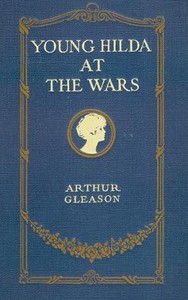
Before opening Young Hilda at the Wars — Edition Insights, the edition data offers a quick orientation: 34,189 words, 2 hr 29 min estimated reading time, and 5 detected text sections.
The text analysis averages about 13.7 words per sentence, while the detected sections provide another way to judge how the source is divided.
Project Gutenberg metadata also associates the work with “World War, 1914-1918 -- Fiction,” connecting these edition facts with the source record’s subject description.
Explore this collection
These alternatives are selected using recorded categories and estimated reading time.
About 161 minutes
Historical Psychological Social Fiction
36,926 recorded words. 12 minutes difference from this book's estimate.
View Gutenberg source #25959About 116 minutes
Historical Psychological Social Fiction
26,473 recorded words. 33 minutes difference from this book's estimate.
View Gutenberg source #24105About 209 minutes
Historical Psychological Social Fiction
47,968 recorded words. 60 minutes difference from this book's estimate.
View Gutenberg source #32336Search stored excerpts and compare books → Choose by your preferences →
Choices use stored catalog measurements. Estimates vary with reading speed. A shared category is a catalog label, not a claim that two books have the same argument or literary quality.
Search reads excerpt text stored with this catalog and links to its associated Gutenberg record. The connection is stored in the site database; this tool does not recheck that every excerpt is word-for-word identical to that external record. Excerpt search does not cover every chapter and does not verify historical publication dates.
Catalog snapshot checked: 2026-09-26. Coverage: 99 public books, 99 available source excerpts.
Calculated from edition completeness, EPUB availability, text structure and catalogue metadata. Not a user rating.
Total of 100 points, scaled to a 2.5-5.0 range. Editions with an empty description or a missing EPUB file are not scored.
Public-domain source text
The source text is kept in the dedicated reader, separate from this catalogue record and its commentary.
The preface immediately establishes that these sketches are not library meditations but witnessed events. Gleason specifies that he saw what he describes, thanks to permission from the Belgian Prime Minister and daily companionship with his son. He notes that only a few details have been altered for storytelling—such as the doctor who rescued thirty aged at Dixmude still being alive, and Hilda receiving the decoration. This upfront disclosure of factual basis sets a tone of documentary authenticity, inviting the reader to trust the narrative as grounded in direct observation.
The preface does more than introduce; it establishes a contract with the reader. Gleason lists specific alterations: the doctor's survival, Smith not receiving the decoration, the candlestick on the piano vibrating to shell fire, the spy continuing to signal, the war-baby not adopted by an American financier, and motor ambulances given to the Corps, not an individual. These details, while minor, signal that the stories are shaped for narrative effect but remain tethered to real events. The author also declares that he saw no pageantry of war—only bleakness: sealed houses, drawn curtains, barred doors, and after shelling, homeless dogs howling and pigeons circling for lost cotes. This stark imagery primes the reader for a grim, unromanticized account.
In the later excerpt, Hilda's ambulance work brings her face to face with an overwhelming scale of misery. The convent hospital, Military Hospital Number One, is described as row after row of Khaki men in bed, overflowing onto stone floors, packed like fish in a tin. The grey stones and drab suits on bundles of straw create a backwash from the tides of slaughter. Hilda, who had been dealing with war bit by bit, now confronts it spread out beyond all dealing with. The author notes that there were no whole men there except the busy stretcher-bearers. This passage emphasizes the cumulative emotional impact on the characters, moving from specific rescues to a broader, numbing horror.
Despite the overwhelming scale, the narrative highlights individual moments of care and defiance. The officer's permission to work along a road, though only for one day and not according to regulations, shows a human breach in military rigidity. The ambulance crew's careful driving to avoid shaking the wounded, their shared snack, and the water barrel long ago given to fevered men—these details underscore a persistent humanity. The author also includes a soldier sobbing from shell shock and a man shaking from ague, illustrating that the war's toll extends beyond physical wounds. The line 'First ambulance I've seen in twenty-four hours' from Captain Davies underscores the scarcity of aid and the crew's crucial role.
Gleason's prose shifts between direct observation and reflective commentary. The preface uses first-person plural ('our little group of helpers') and specifies the author's own weeks as a stretcher-bearer. In the narrative, the point of view often aligns with Hilda, but the author occasionally steps back to comment on the broader scene, as when he notes that the undramatic slaughter was slower than the guns but as thorough. This dual perspective—participant and observer—gives the text a layered quality. The structure, with chapter titles like 'The Ribbons that Stuck in His Coat' and 'The Piano of Pervyse,' suggests a collection of vignettes rather than a continuous plot, each focusing on a specific image or incident.
Readers should approach Young Hilda at the Wars as a series of witnessed sketches rather than a novel with a conventional arc. The preface's explicit grounding in real events invites scrutiny of how experience is shaped into narrative. Pay attention to the recurring motifs of bleak landscapes and overwhelmed helpers, and note how the author balances specific rescue stories with the numbing scale of suffering. The book rewards those who read for concrete detail and documentary texture rather than plot progression.
I remember summer evenings when the world felt safe enough for secrets buried in rocks. Gleason’s Hilda, driving through that relentless gray waste, made me ache for a quiet, certain horizon—like the one I found tucked inside The Girls of Hillcrest Farm; Or, The Secret of the Rocks — A Closer Reading. Both books hold a girl meeting fear with steady hands, though one war is weather, and the other, war itself.
Save your reaction, strongest insight, and memorable passage.