About 149 minutes
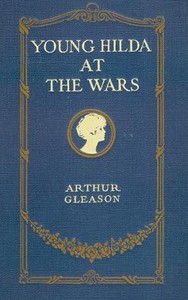
Young Hilda at the Wars — Edition Insights
Historical Psychological Social Fiction
34,189 recorded words. 12 minutes difference from this book's estimate.
View Gutenberg source #25836

Littlebourne Lock — Reading Notes can be approached with a clearer sense of reading commitment from its source measurements: 36,926 words, 2 hr 41 min estimated reading time, and 5 detected text sections.
The text analysis averages about 14.6 words per sentence, while the detected sections provide another way to judge how the source is divided.
Project Gutenberg metadata also associates the work with “Didactic fiction,” connecting these edition facts with the source record’s subject description.
Explore this collection
These alternatives are selected using recorded categories and estimated reading time.
About 149 minutes
Historical Psychological Social Fiction
34,189 recorded words. 12 minutes difference from this book's estimate.
View Gutenberg source #25836About 116 minutes
Historical Psychological Social Fiction
26,473 recorded words. 45 minutes difference from this book's estimate.
View Gutenberg source #24105About 209 minutes
Historical Psychological Social Fiction
47,968 recorded words. 48 minutes difference from this book's estimate.
View Gutenberg source #32336Search stored excerpts and compare books → Choose by your preferences →
Choices use stored catalog measurements. Estimates vary with reading speed. A shared category is a catalog label, not a claim that two books have the same argument or literary quality.
Search reads excerpt text stored with this catalog and links to its associated Gutenberg record. The connection is stored in the site database; this tool does not recheck that every excerpt is word-for-word identical to that external record. Excerpt search does not cover every chapter and does not verify historical publication dates.
Catalog snapshot checked: 2026-09-26. Coverage: 99 public books, 99 available source excerpts.
Calculated from edition completeness, EPUB availability, text structure and catalogue metadata. Not a user rating.
Total of 100 points, scaled to a 2.5-5.0 range. Editions with an empty description or a missing EPUB file are not scored.
Public-domain source text
The source text is kept in the dedicated reader, separate from this catalogue record and its commentary.
F. Bayford Harrison opens Littlebourne Lock with a July morning on the Thames, where the mist is 'soft' and 'thin,' and the lock-keeper Edward Rowles inspects his peas, beans, and poultry before waking his son Philip. The domestic routine—toasting bread, sweeping the kitchen—is rendered in plain, concrete language that establishes a stable, orderly world. This careful attention to the rhythms of lock-house life sets the stage for the arrival of Juliet Mitchell, a London girl whose presence will disrupt that order.
Harrison uses dialogue to distinguish characters by background and temperament. Edward Rowles speaks in short, practical sentences: 'Get up, lad, get up; don't be the last.' His wife’s instructions are equally direct: 'Come, bustle about, Emily.' When the conversation turns to London, Rowles declares it 'awful hot' with 'millions of people,' a remark that prompts his son to ask how to write a million. This exchange reveals both the father’s limited experience and the boy’s curiosity.
Later, the visitor Mr. Burnet speaks in longer, more reflective phrases: 'One wants rest after the heat and burden of the day; and it is a blessed thing when at evening time there is light.' His elevated diction contrasts with Rowles’s bluntness, marking him as educated and contemplative. The printer Roberts, meanwhile, uses colloquial reasoning: 'Oh, come now; you are too hard on printers, you are.' Through these vocal differences, Harrison sketches a social hierarchy without explicit commentary.
One of the most striking passages occurs when Juliet Mitchell confronts her reflection in a crooked looking-glass. Harrison describes her face as 'more like those of some fierce and raging animal than the features of a young girl in a Christian land.' The phrase 'Christian land' carries moral weight, implying that Juliet’s anger is a lapse from expected decency.
Juliet then addresses herself in the second person: 'What a horrid, ugly, cross thing, you are!' and 'You are the ugliest, the crossest, most stupid, awkward creature I ever did come near.' This self-accusation, delivered as a monologue, reveals her internalized shame and frustration. The mirror’s faulty swing—'stuck half-way'—mirrors her own unstable state. Harrison uses this moment to dramatize Juliet’s self-awareness and her sense of being trapped, both physically and socially.
The opening chapters establish the lock-house as a place of regulated tasks: feeding chickens, sweeping, lighting the fire. The river is described as 'shrouded' in mist, but the sun is 'shining' above it, and the larks are singing. This pastoral calm is disrupted by Juliet, who is introduced through a broken jug and spilt soup—a domestic accident that signals her unsuitability for country life.
Harrison reinforces the contrast through the characters’ attitudes toward London. Rowles calls it 'awful hot' and imagines people 'precious glad to get out.' Juliet’s father is a printer who 'sits up all night,' a detail that associates urban work with exhaustion and disorder. When Rowles learns that Mr. Burnet is also a printer, he 'began to think better of printers in general,' showing how prejudice can be softened by personal acquaintance. The river journey of the visitors—'going up between the green banks and hedges, all deliciously freshened'—reasserts the restorative power of the countryside.
Harrison’s narrator occasionally steps back to offer moral commentary, as when Juliet’s angry reflection is called 'enough to frighten her, and did frighten her.' The repetition of 'frighten' underscores the shock of self-recognition. The narrator also notes that Juliet 'could not stand being jawed' and that her aunt’s look is 'more piercing than if she was to talk for weeks.' These observations align the reader with Juliet’s perspective even as they judge her behavior.
The didactic strain is evident in Mr. Burnet’s speech about 'the heat and burden of the day' and 'the repose and joy of the future.' Such passages, while earnest, risk slowing the narrative. Yet they also reflect the book’s genre as domestic fiction aimed at young readers, where lessons about patience and self-improvement are woven into the plot. The narrator’s tone remains consistent: sympathetic but firm, encouraging the reader to see Juliet’s faults as correctable.
Readers attentive to Harrison’s craft will notice how she uses small details—a crooked mirror, a broken jug, a handful of mustard-and-cress—to build character and theme. The dialogue, with its class-inflected rhythms, rewards close reading. While the excerpts do not reveal the full resolution of Juliet’s story, they establish a clear moral landscape in which rural life offers a chance for redemption, provided the wayward individual is willing to change.
Reading the notes on Littlebourne Lock, I kept thinking of how the lock-keeper's quiet world held its own weight against Juliet's noise. It reminded me of the gentle way Sube Cane — Story, Setting & Ideas treats its own small places, each detail a hush rather than a statement. Some stories simply let you sit with them. That was the feeling, anyway.
Your answers remain private and are stored only in this browser.