About 341 minutes
The Crimson Sweater — Text and Context
Historical Psychological Social Fiction
78,409 recorded words. 7 minutes difference from this book's estimate.
View Gutenberg source #33425
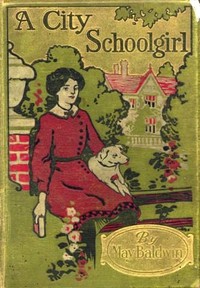
The source record for A City Schoolgirl and Her Friends — Inside the Classic measures this digital text at 76,801 words, 5 hr 34 min estimated reading time, and 7 detected text sections.
The text analysis averages about 19.7 words per sentence, while the detected sections provide another way to judge how the source is divided.
Project Gutenberg metadata also associates the work with “Love stories,” connecting these edition facts with the source record’s subject description.
Explore this collection
These alternatives are selected using recorded categories and estimated reading time.
About 341 minutes
Historical Psychological Social Fiction
78,409 recorded words. 7 minutes difference from this book's estimate.
View Gutenberg source #33425About 327 minutes
Historical Psychological Social Fiction
74,999 recorded words. 7 minutes difference from this book's estimate.
View Gutenberg source #38353About 316 minutes
Historical Psychological Social Fiction
72,467 recorded words. 18 minutes difference from this book's estimate.
View Gutenberg source #30952Search stored excerpts and compare books → Choose by your preferences →
Choices use stored catalog measurements. Estimates vary with reading speed. A shared category is a catalog label, not a claim that two books have the same argument or literary quality.
Search reads excerpt text stored with this catalog and links to its associated Gutenberg record. The connection is stored in the site database; this tool does not recheck that every excerpt is word-for-word identical to that external record. Excerpt search does not cover every chapter and does not verify historical publication dates.
Catalog snapshot checked: 2026-09-26. Coverage: 99 public books, 99 available source excerpts.
Calculated from edition completeness, EPUB availability, text structure and catalogue metadata. Not a user rating.
Total of 100 points, scaled to a 2.5-5.0 range. Editions with an empty description or a missing EPUB file are not scored.
Public-domain source text
The source text is kept in the dedicated reader, separate from this catalogue record and its commentary.
The novel opens with a blunt declaration of financial ruin: a lawyer informs the orphaned Stella Wharton that she and her sister Vava have only fifty pounds a year to live on. This scene establishes a pattern of abrupt, factual disclosures that punctuate the narrative. The title's promise of 'city schoolgirl' is immediately complicated by the sisters' adult responsibilities and the rapid shifts in setting—from a lawyer's office to a train journey north, then back to London lodgings and finally to a new home. Baldwin structures the early chapters as a series of departures and arrivals, each marked by a change in fortune and a fresh set of domestic arrangements.
The first chapter, titled 'Hard Facts,' sets a tone of economic realism that recurs throughout the excerpts. The lawyer's phrase 'hard facts no doubt' is echoed later when Vava declares she is 'glad to have said good-bye to those horrid lodgings.' The narrative moves swiftly from the Whartons' genteel past to a constrained present, then to a train journey and a new life in Scotland. This rapid relocation is mirrored in the chapter titles: 'The New Laird of Lomore,' 'The New Life,' 'In Lonely Lodgings,' 'Off to a Home Again.' Each shift resets the domestic sphere, and the sisters are repeatedly shown unpacking, arranging furniture, or settling into unfamiliar rooms. The physical act of moving—by train, by carriage, on foot—becomes a structural motif, linking economic necessity to geographical displacement.
Baldwin devotes considerable attention to the arrangement of rooms. When Stella and Vava arrive at their new home, the description of Amy's bedroom—'a nice bed and a chest of drawers and washstand of light oak, very simple but quite pretty'—contrasts with the earlier 'chaos' of unpacking. The arrival of Mrs. Morrison, the old nurse from Lomore, brings 'porridge and hot scones' and a sense of maternal order. The kitchen becomes a gathering place where the four girls talk 'happily' over breakfast. These domestic scenes are punctuated by moments of tension: Amy's quiet depression over 'Eva's suite,' Stella's concern that her authority might be usurped. The recurring image of a well-set table or a tidy room signals emotional stability, while disorder—'my bedroom is chaos'—reflects underlying unease. The narrative moves between these interior spaces as if between stages of a play, each room carrying its own emotional weight.
The excerpts reveal Baldwin's reliance on dialogue to advance plot and reveal character. The opening exchange between Stella and Mr. Stacey is formal and direct, establishing the sisters' predicament without sentimentality. Later, Vava's exclamation—'I am hungry'—and her simple 'I am thankful' show a directness that contrasts with Stella's more measured speech. The argument about Eva's 'presentiment' introduces a recurring tension between rationality and superstition: Stella calls presentiments 'very foolish things,' while Vava insists that Eva's vague foreboding has been fulfilled by Mrs. Morrison's arrival. This disagreement is left unresolved, suggesting that the novel will continue to explore the gap between practical sense and emotional intuition. The dialogue is often brisk, with characters interrupting each other or shifting topics abruptly, mimicking the rapid changes in their circumstances.
Although the title emphasizes the 'city schoolgirl,' the excerpts show the sisters moving between urban and rural settings. The lawyer's office in London, the 'horrid lodgings,' and Amy's 'City work' represent the pressures of metropolitan life. In contrast, the Scottish estate of Lomore and the new home with its 'motherly' nurse evoke a pastoral ideal. The journey north is described as an escape: Vava is 'glad to have said good-bye' to the lodgings. Yet the country is not simply idyllic; it brings its own complications, such as the need to manage a household and the arrival of unexpected guests. The novel's structure—alternating between city and country chapters—suggests that neither setting offers a permanent solution. The recurring image of a train journey, with its sense of transition and uncertainty, underscores the sisters' precarious position between two worlds.
Readers attentive to Baldwin's handling of space and movement will notice how each change of address brings a new set of social and emotional challenges. The novel's episodic structure, signaled by its many short chapters, rewards attention to the details of furniture, meals, and the arrangement of rooms. These concrete particulars ground the story in a recognizable world of economic constraint and domestic aspiration, without requiring knowledge of the complete plot.
The rain kept time with the opening chapters of A City Schoolgirl and Her Friends, those cramped rooms and worried mothers. Later, as the clouds thinned, I found myself restless about what came next for girls in cottages, for quiet pride. That’s how I stumbled onto Polly of Lady Gay Cottage — Edition Insights, and the afternoon softened into a different sort of comfort, gentler, more like home.
Capture what you thought, learned, and would like to remember.