About 213 minutes
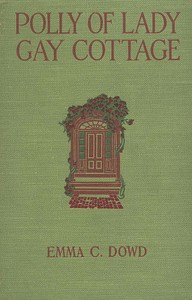
Polly of Lady Gay Cottage — Edition Insights
Historical Psychological Social Fiction
48,835 recorded words. 6 minutes difference from this book's estimate.
View Gutenberg source #29088
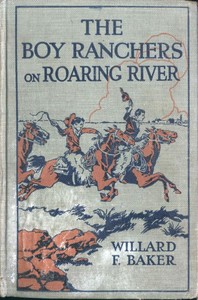
The source record for The Boy Ranchers on Roaring River; Or, Diamond X and the Chinese Smugglers — A Reader’s Guide measures this digital text at 50,167 words, 3 hr 39 min estimated reading time, and 7 detected text sections.
The text analysis averages about 10.8 words per sentence, while the detected sections provide another way to judge how the source is divided.
Project Gutenberg metadata also associates the work with “Smuggling -- Juvenile fiction,” connecting these edition facts with the source record’s subject description.
Explore this collection
These alternatives are selected using recorded categories and estimated reading time.
About 213 minutes
Historical Psychological Social Fiction
48,835 recorded words. 6 minutes difference from this book's estimate.
View Gutenberg source #29088About 209 minutes
Historical Psychological Social Fiction
47,968 recorded words. 10 minutes difference from this book's estimate.
View Gutenberg source #32336About 231 minutes
Historical Psychological Social Fiction
52,925 recorded words. 12 minutes difference from this book's estimate.
View Gutenberg source #28331Search stored excerpts and compare books → Choose by your preferences →
Choices use stored catalog measurements. Estimates vary with reading speed. A shared category is a catalog label, not a claim that two books have the same argument or literary quality.
Search reads excerpt text stored with this catalog and links to its associated Gutenberg record. The connection is stored in the site database; this tool does not recheck that every excerpt is word-for-word identical to that external record. Excerpt search does not cover every chapter and does not verify historical publication dates.
Catalog snapshot checked: 2026-09-26. Coverage: 99 public books, 99 available source excerpts.
Calculated from edition completeness, EPUB availability, text structure and catalogue metadata. Not a user rating.
Total of 100 points, scaled to a 2.5-5.0 range. Editions with an empty description or a missing EPUB file are not scored.
Public-domain source text
The source text is kept in the dedicated reader, separate from this catalogue record and its commentary.
The opening of The Boy Ranchers on Roaring River immediately establishes a colloquial, Western voice through the character Yellin' Kid, whose speech is peppered with exclamations like “Hold up there, you pint o' peanuts!” and “By golly, ranchin' is sure doin' you fellers good!” This vernacular, marked by contractions and regional idioms, sets a tone of informal camaraderie. The narrative voice shifts between this lively dialogue and more neutral, descriptive passages, creating a rhythm that alternates between character-driven energy and exposition. The pace accelerates during action sequences, such as Bud's capture, where short sentences and abrupt actions—like Delton pulling Bud off his pony—heighten tension. In contrast, slower moments, like the description of the ramshackle house, allow for atmospheric detail. This interplay of voice and pace is a key feature of the text.
The dialogue in the excerpts is rich with Western slang and phonetic spelling, which immediately distinguishes characters. Yellin' Kid uses phrases like “dust-raiser” for a horse and “pint o' peanuts” as a playful insult, while Delton speaks in a harsher, more clipped manner: “Where I come from we treat 'em worse than that.” This contrast in speech patterns not only defines individual personalities but also signals social roles—the Kid as a friendly cowboy, Delton as a menacing outsider. The narrator occasionally adopts similar colloquialisms, such as “she ain't used to my ways yet,” blending into the characters' world. However, the narrative voice remains distinct in descriptive passages, using standard English to frame the action. This dual register creates a layered reading experience, where the authenticity of the Western setting is reinforced through dialogue, while the narrator provides clarity and pacing.
The excerpts demonstrate a deliberate modulation of pace. In the opening scene, the pace is leisurely, with banter among the boys and Yellin' Kid. The narrative lingers on details like the cowboy dismounting and the pony prancing. This changes abruptly during Bud's capture: “Delton seized Bud by the belt and pulled. The boy tumbled off his pony and hit the ground.” Short, declarative sentences and rapid-fire actions accelerate the tempo. Later, in the locked room, the pace slows again as Bud observes his surroundings: “He noticed some sort of a hat-tree in the hall… the doors of several rooms.” This alternation between fast-paced action and slower, observational passages creates a rhythm that keeps the reader engaged. The use of ellipses and dashes in dialogue also contributes to pacing, as seen in Sam's hesitant speech: “I ain't paid to talk to you. Let's go,” which conveys tension through fragmentation.
The setting is used strategically to modulate narrative tension. The open ranch and cook-house in the opening suggest safety and familiarity, with the boys seated on a bench. In contrast, the isolated, dilapidated house where Bud is taken is described in detail: “a ramshackle affair, with the roof partly torn away and no vestige of paint.” This decayed environment mirrors the threat posed by Delton and Sam. The interior is equally oppressive: “The shades were pulled down tight, and the gloom made it very difficult for Bud to see much.” The barred windows and oak door reinforce the sense of confinement. These spatial details are not merely decorative; they directly influence the pace and mood. The open landscape allows for quick movement and escape, while the enclosed spaces force stillness and observation, slowing the narrative. This contrast between open and closed settings is a recurring structural element.
Readers attentive to language will notice how Baker uses dialect not only for authenticity but to signal character allegiance and threat level. The shifts between rapid action and deliberate description reward a careful reading of pacing. The setting, from open range to locked room, functions as more than backdrop—it actively shapes the story's tension. These elements together make the book a study in how adventure fiction balances voice, pace, and place.
There are moments in The Boy Ranchers on Roaring River where the swift action slows to a quiet pause, and in that hush I found myself thinking of another kind of stillness—one found in Elsie's Widowhood A Sequel to Elsie's Children — Key Ideas to Explore. Both linger on what remains after the noise settles, a gentle shadow of change.
Create a short personal record of your experience with this book.