About 231 minutes
The Young Ranchers; Or, Fighting the Sioux — A Closer Reading
Historical Psychological Social Fiction
52,925 recorded words. 8 minutes difference from this book's estimate.
View Gutenberg source #28331
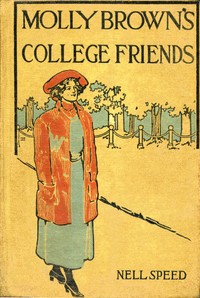
This digital edition of Molly Brown's College Friends — Reading Companion is described by source-level measurements including 54,882 words, 3 hr 59 min estimated reading time, and 6 detected text sections.
The text analysis averages about 15.0 words per sentence, while the detected sections provide another way to judge how the source is divided.
Project Gutenberg metadata also associates the work with “Friendship -- Juvenile fiction,” connecting these edition facts with the source record’s subject description.
Explore this collection
These alternatives are selected using recorded categories and estimated reading time.
About 231 minutes
Historical Psychological Social Fiction
52,925 recorded words. 8 minutes difference from this book's estimate.
View Gutenberg source #28331About 251 minutes
Historical Psychological Social Fiction
57,728 recorded words. 12 minutes difference from this book's estimate.
View Gutenberg source #30914About 219 minutes
Historical Psychological Social Fiction
50,167 recorded words. 20 minutes difference from this book's estimate.
View Gutenberg source #27096Search stored excerpts and compare books → Choose by your preferences →
Choices use stored catalog measurements. Estimates vary with reading speed. A shared category is a catalog label, not a claim that two books have the same argument or literary quality.
Search reads excerpt text stored with this catalog and links to its associated Gutenberg record. The connection is stored in the site database; this tool does not recheck that every excerpt is word-for-word identical to that external record. Excerpt search does not cover every chapter and does not verify historical publication dates.
Catalog snapshot checked: 2026-09-26. Coverage: 99 public books, 99 available source excerpts.
Calculated from edition completeness, EPUB availability, text structure and catalogue metadata. Not a user rating.
Total of 100 points, scaled to a 2.5-5.0 range. Editions with an empty description or a missing EPUB file are not scored.
Public-domain source text
The source text is kept in the dedicated reader, separate from this catalogue record and its commentary.
The novel opens with Molly Brown, now Mrs. Edwin Green, preparing a guest room for her old friend Nance Oldham. Her husband, a professor of English, helps hang curtains, and their easy banter establishes a warm domestic tone. The narrator notes that Molly has changed little since her college days, and that her daughter Mildred knows her letters “upside down and no other way.” This domestic scene quickly gives way to a broader campus setting, where President Miss Walker and Professor Green discuss student behavior and a handsome new instructor, M. Misel.
The excerpts then shift to a nighttime prank: three veiled girls—Judy, Katherine, and Otoyo—run through the dark, impersonate the Musicians of Bremen, and bray, crow, and meow under a math teacher’s window. The episode is playful but also hints at the tension between authority and mischief that runs through the book.
The opening chapter, “Nance Oldham,” establishes a key dynamic: Molly’s married life is comfortable yet still centered on her college friendships. She worries that Nance may have changed, but Professor Green reassures her: “I think she is the kind of girl who will always be the same.” This line sets up a theme of constancy versus change. The domestic details—hanging curtains, arranging bureau scarves—are rendered with specificity, grounding the story in the physical world of Wellington College. Molly’s role as wife and mother is clear, but her identity as a friend remains equally important.
A later excerpt features Judy, Katherine, and Otoyo sneaking out after dark, veiled, to perform the “Musicians of Bremen” under a math teacher’s window. Their prank is elaborate: Judy brays like a donkey, Katherine crows, Otoyo mews. The scene is comic but also reveals the girls’ daring and the faculty’s watchfulness. President Miss Walker earlier remarked that “such terrible things seem to be happening all over the world,” linking campus mischief to a broader unease. The prank’s success depends on a dog’s howling providing cover, a detail that underscores the improvisational nature of their rebellion.
Chapter XVI is titled “War Relief,” signaling that the narrative moves beyond campus high jinks. The catalog subject “World War, 1914-1918 — Juvenile fiction” confirms that the war becomes a plot element. The excerpts do not detail the relief work, but the shift in tone from pranks to war-related activities suggests a maturation of the characters. The presence of a chapter called “The Trenches” (XXIV) indicates that the war’s impact reaches the college community directly. This progression from lighthearted mischief to serious engagement gives the novel a layered structure.
Throughout the excerpts, veiled figures appear repeatedly. In the opening, three girls are described as “veiled, so evidently whatever they were doing they did not want to be recognized.” Later, the same trio uses veils during their prank. The motif of concealment—literal and figurative—recurs. A chapter titled “The Arrest” (XXII) and another called “A Death” (XIX) suggest that secrets have consequences. The reader is left to infer what the veiled girls are hiding and how their actions connect to the war relief and the larger plot. The incomplete excerpts leave these threads dangling, inviting curiosity.
The excerpts present a novel that balances domestic comedy, campus pranks, and the encroaching seriousness of World War I. The veiled figures and the chapter titles hint at a mystery that may involve the characters’ wartime activities. Readers should pay attention to how the playful tone of the early chapters gives way to graver concerns, and how the friendships forged at college are tested by external events. The book rewards attention to small details—like the upside-down letters or the Musicians of Bremen—that echo later developments.
Reading about Molly’s domestic peace, I remembered my own college friendships, how they frayed and mended. That quiet ache of holding onto who we were felt familiar. It surfaced again when I turned the pages of The Young Ranchers; Or, Fighting the Sioux — A Closer Reading, where loyalty is tested by open plains rather than parlors. The same thread of enduring under pressure, just worn differently.
Save your reaction, strongest insight, and memorable passage.