About 304 minutes
Wyn's Camping Days; Or, The Outing of the Go-Ahead Club — Inside the Classic
Historical Psychological Social Fiction
69,886 recorded words. 0 minutes difference from this book's estimate.
View Gutenberg source #31419
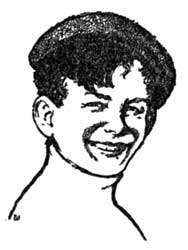
Sube Cane — Story, Setting & Ideas can be approached with a clearer sense of reading commitment from its source measurements: 69,886 words, 5 hr 4 min estimated reading time, and 9 detected text sections.
The text analysis averages about 13.5 words per sentence, while the detected sections provide another way to judge how the source is divided.
Project Gutenberg metadata also associates the work with “Friendship -- Juvenile fiction,” connecting these edition facts with the source record’s subject description.
Explore this collection
These alternatives are selected using recorded categories and estimated reading time.
About 304 minutes
Historical Psychological Social Fiction
69,886 recorded words. 0 minutes difference from this book's estimate.
View Gutenberg source #31419About 298 minutes
Historical Psychological Social Fiction
68,316 recorded words. 6 minutes difference from this book's estimate.
View Gutenberg source #27985About 293 minutes
Historical Psychological Social Fiction
67,217 recorded words. 11 minutes difference from this book's estimate.
View Gutenberg source #32225Search stored excerpts and compare books → Choose by your preferences →
Choices use stored catalog measurements. Estimates vary with reading speed. A shared category is a catalog label, not a claim that two books have the same argument or literary quality.
Search reads excerpt text stored with this catalog and links to its associated Gutenberg record. The connection is stored in the site database; this tool does not recheck that every excerpt is word-for-word identical to that external record. Excerpt search does not cover every chapter and does not verify historical publication dates.
Catalog snapshot checked: 2026-09-26. Coverage: 99 public books, 99 available source excerpts.
Calculated from edition completeness, EPUB availability, text structure and catalogue metadata. Not a user rating.
Total of 100 points, scaled to a 2.5-5.0 range. Editions with an empty description or a missing EPUB file are not scored.
Public-domain source text
The source text is kept in the dedicated reader, separate from this catalogue record and its commentary.
Sube Cane opens with its twelve-year-old protagonist astride his father's stable ridgepole, pretending to ride a horse while rubbing his upper lip with hair restorer he has stolen from a doctor's sample. The narrator notes that Sube is “set upon the propagation of a mustache,” and the scene establishes a pattern of scientific curiosity applied to mischief. The prose is brisk and ironic, describing Sube's experiments with a deadpan tone that treats his schemes as serious undertakings. The first chapter's title, “Before Using,” hints at the gap between intention and outcome that will drive the story.
The excerpts show Sube reasoning in ways that are logical to him but disastrous in practice. When he hears that hair restorer “would grow hair on the side of a house,” he tests it on the house—then applies it to his own lip. Later, when he paints Biscuit's back with black paint, he justifies it as an initiation: “we've got to 'nitiate you, ain't we?” The narrator does not condemn these actions but presents them as the natural outcome of a boy who takes adult claims literally and applies them to his own world. Readers should watch for how Sube's interpretations of what he hears—from doctors, parents, or friends—lead him into trouble.
The excerpts introduce a cast of boys with nicknames like Gizzard, Biscuit, and Cathead. Their interactions are governed by a rough code: Sube is the leader, Gizzard the accomplice, and Biscuit the victim. The swimming-hole scene shows how quickly play can turn into coercion—Biscuit is held down while Sube paints him. Yet the tone remains comic, with Sube declaiming like a showman: “Watch me closely, ladies and gent'mun.” The narrator uses formal language for absurd situations, creating a gap between the boys' crude actions and the elevated description. This social hierarchy and its rituals of initiation and revenge are central to the novel's comedy.
The narrator frequently steps back to comment on Sube's motives with dry humor. When Sube chases Biscuit, the narrator notes that “if Sube had put his thoughts in words they would have sounded something like this,” then gives a panicked internal monologue. This technique reveals Sube's real fears—meeting someone, failing to catch Biscuit, Biscuit reaching his mother—while maintaining the pretense of revenge. The illustrations listed in the contents, such as “Professional jealousy” and “A great light broke on him,” suggest that the visual humor matches the verbal. Readers should attend to the narrator's asides, which often undercut Sube's self-image as a master planner.
Several details recur across the excerpts. Sube's mustache project appears only in the first chapter, but the hair restorer bottle is mentioned again in the illustration list. Paint appears as a tool for both art and vandalism: Sube leaves Biscuit's initials on a bridge railing and later uses black paint on skin. The setting includes a mill, a swimming-hole, and a stable, all places where boys gather away from adults. The chapter titles suggest a sequence of schemes: “A Flyer in Cats,” “The Barnstormers,” “Sube Goes To the Movies.” These patterns indicate that the novel is structured around Sube's entrepreneurial attempts, each ending in comic failure or unexpected success.
The excerpts from Sube Cane present a protagonist whose energy and inventiveness are matched only by his lack of foresight. Readers will find that the humor depends on the gap between Sube's confidence and the actual results of his plans. The narrative rewards attention to its ironic voice and to the ways Sube misapplies adult logic to his own world. The book is best read as a series of episodes rather than a tightly plotted novel, with each chapter offering a new scheme and its consequences.
I recall painting my own eyebrows with shoe polish at eleven, certain I’d become someone else by supper. Sube Cane caught that same giddy, doomed itch, the way invention tangles with shame and laughter. It reminded me of reading The Girls of Hillcrest Farm; Or, The Secret of the Rocks — A Closer Reading, where hidden things surface slowly, and every secret costs a little more innocence than planned.
Your answers remain private and are stored only in this browser.