About 334 minutes
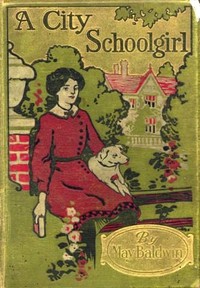
A City Schoolgirl and Her Friends — Inside the Classic
Historical Psychological Social Fiction
76,801 recorded words. 7 minutes difference from this book's estimate.
View Gutenberg source #30837
This digital edition of Elsie's Widowhood A Sequel to Elsie's Children — Key Ideas to Explore is described by source-level measurements including 74,999 words, 5 hr 27 min estimated reading time, and 9 detected text sections.
The text analysis averages about 17.8 words per sentence, while the detected sections provide another way to judge how the source is divided.
Project Gutenberg metadata also associates the work with “Christian life -- Juvenile fiction,” connecting these edition facts with the source record’s subject description.
Explore this collection
These alternatives are selected using recorded categories and estimated reading time.
About 334 minutes
Historical Psychological Social Fiction
76,801 recorded words. 7 minutes difference from this book's estimate.
View Gutenberg source #30837About 316 minutes
Historical Psychological Social Fiction
72,467 recorded words. 11 minutes difference from this book's estimate.
View Gutenberg source #30952About 341 minutes
Historical Psychological Social Fiction
78,409 recorded words. 14 minutes difference from this book's estimate.
View Gutenberg source #33425Search stored excerpts and compare books → Choose by your preferences →
Choices use stored catalog measurements. Estimates vary with reading speed. A shared category is a catalog label, not a claim that two books have the same argument or literary quality.
Search reads excerpt text stored with this catalog and links to its associated Gutenberg record. The connection is stored in the site database; this tool does not recheck that every excerpt is word-for-word identical to that external record. Excerpt search does not cover every chapter and does not verify historical publication dates.
Catalog snapshot checked: 2026-09-26. Coverage: 99 public books, 99 available source excerpts.
Calculated from edition completeness, EPUB availability, text structure and catalogue metadata. Not a user rating.
Total of 100 points, scaled to a 2.5-5.0 range. Editions with an empty description or a missing EPUB file are not scored.
Public-domain source text
The source text is kept in the dedicated reader, separate from this catalogue record and its commentary.
Martha Finley's Elsie's Widowhood opens not with the titular widow's grief but with a scene of domestic tenderness: Mrs. Travilla caressing her daughter Elsie's hair while Violet looks on. The preface admits the title was demanded by the public, and the author's stated aim is to show how 'the love of Christ in the heart can make life happy even under sore bereavement.' Yet the excerpts quickly shift to a secondary plot involving a disabled writer named Molly and a widower, Mr. Embury, who proposes marriage. This suggests the book may interweave multiple narratives of consolation rather than focusing solely on Elsie's widowhood.
The author's preface directly addresses the reader, explaining that the title was imposed by public demand and that the book's purpose is to demonstrate Christian comfort in affliction. Finley quotes the apostle Paul—'I am filled with comfort, I am exceeding joyful in all our tribulation'—and frames the story as a lesson in where to 'go for relief and consolation.' This paratextual evidence shows that the catalog subject 'Christian life' is explicitly thematized, but the excerpts suggest the consolation is delivered through romantic and domestic plots rather than overt religious instruction. The preface's tone is personal and prayerful, ending with an 'earnest prayer' for the reader's benefit.
The most extended excerpt depicts a proposal between Molly, who describes herself as 'chained to my chair' and earning a 'pittance by my pen,' and Mr. Embury, a widower with young children. The dialogue emphasizes Molly's physical limitations and her fear of being a burden: 'I can never walk by your side... I cannot nurse you in sickness.' Mr. Embury counters by valuing her 'love' and 'the blessed privilege of taking care of you.' The children are brought in to plead his case, and Molly's 'mother instinct' is stirred. This scene, while not directly about Elsie, mirrors the book's concern with finding happiness after loss—here, the loss of mobility and independence—through a relationship that redefines giving and receiving.
The excerpts rely heavily on emotional language and physical gestures to convey feeling: tears 'trembling in the soft brown eyes,' a 'thrill of exquisite joy' followed by 'bitter sorrow,' a hand lifted to lips, and children offering kisses. Dialogue is punctuated with exclamations and dashes, creating a breathless, sentimental tone. The setting is intimate—a dressing-room, a private interview—and the narrative voice lingers on caresses and glances. This stylistic evidence suggests that Finley prioritizes emotional states over action, consistent with the catalog's 'Domestic fiction' and 'Religious fiction' tags, but the excerpts do not show explicit religious teaching; instead, the comfort is embodied in human relationships.
Readers approaching Elsie's Widowhood should note that the excerpts focus on a secondary character's romance, not on Elsie's own grief. The preface's promise of Christian consolation may be delivered through multiple storylines. Pay attention to how Finley uses physical disability and dependence as a vehicle for exploring love and care, and consider whether the religious framework is as central as the catalog suggests or more subtly woven into domestic scenes.
That rainy afternoon, Elsie's Widowhood felt less like a story and more like a quiet hand on my shoulder—consolation, not plot. When Elsie’s grief softened into patience, I set it down, and my eyes drifted to a dog-eared copy of The Young Ranchers; Or, Fighting the Sioux — A Closer Reading on the shelf. Same prairie loneliness, same stubborn dignity, spoken in a different voice.
Answer a few questions and save a private reflection on this device.