About 334 minutes
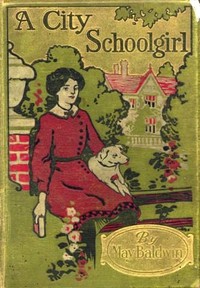
A City Schoolgirl and Her Friends — Inside the Classic
Historical Psychological Social Fiction
76,801 recorded words. 7 minutes difference from this book's estimate.
View Gutenberg source #30837
For The Crimson Sweater — Text and Context, the stored edition analysis reports 78,409 words, 5 hr 41 min estimated reading time, and 9 detected text sections.
The text analysis averages about 14.3 words per sentence, while the detected sections provide another way to judge how the source is divided.
Project Gutenberg metadata also associates the work with “Football -- Juvenile fiction,” connecting these edition facts with the source record’s subject description.
Explore this collection
These alternatives are selected using recorded categories and estimated reading time.
About 334 minutes
Historical Psychological Social Fiction
76,801 recorded words. 7 minutes difference from this book's estimate.
View Gutenberg source #30837About 327 minutes
Historical Psychological Social Fiction
74,999 recorded words. 14 minutes difference from this book's estimate.
View Gutenberg source #38353About 316 minutes
Historical Psychological Social Fiction
72,467 recorded words. 25 minutes difference from this book's estimate.
View Gutenberg source #30952Search stored excerpts and compare books → Choose by your preferences →
Choices use stored catalog measurements. Estimates vary with reading speed. A shared category is a catalog label, not a claim that two books have the same argument or literary quality.
Search reads excerpt text stored with this catalog and links to its associated Gutenberg record. The connection is stored in the site database; this tool does not recheck that every excerpt is word-for-word identical to that external record. Excerpt search does not cover every chapter and does not verify historical publication dates.
Catalog snapshot checked: 2026-09-26. Coverage: 99 public books, 99 available source excerpts.
Calculated from edition completeness, EPUB availability, text structure and catalogue metadata. Not a user rating.
Total of 100 points, scaled to a 2.5-5.0 range. Editions with an empty description or a missing EPUB file are not scored.
Public-domain source text
The source text is kept in the dedicated reader, separate from this catalogue record and its commentary.
In The Crimson Sweater, Ralph Henry Barbour constructs a world where athletic prowess and social standing are tightly interwoven. The narrative opens with Roy Porter, a new boy at Ferry Hill School, navigating the treacherous currents of boarding-school life. The titular sweater—a crimson garment adorned with a white 'H'—functions as both a badge of honor and a target, marking its wearer as part of an elite athletic fraternity. Barbour's prose is brisk and detail-oriented, favoring action over introspection, yet the story's tensions emerge through carefully staged set pieces. One such scene, a theatrical tableau meant to showcase school spirit, instead reveals the fragility of performance and the hidden costs of belonging.
The entertainment sequence in the excerpt is a masterclass in social choreography. Barbour arranges a series of college-athlete tableaux, each boy embodying a specific sport and institution: Roy as a Yale footballer in his crimson sweater, Chub as a Princeton baseball player, Warren as a Cornell oarsman, and so on. The audience's applause is calibrated—Chub's reception is noted as a tribute to his captaincy rather than his costume. This moment crystallizes how athletic reputation precedes and shapes public perception. The tableau is not mere pageantry; it is a ritual of hierarchy, where each boy's place in the school's social order is visually affirmed.
Yet the scene subverts its own order. Harry, the only girl, insists on appearing as a Vassar student, a role the boys initially deem out of place. Her success—described as 'the success of the evening'—disrupts the masculine athletic frame. Barbour lingers on her coiled red hair and the 'grace' of her pose, suggesting that femininity, when performed with confidence, can command a different kind of authority. The tableau thus becomes a site of tension between the school's official values (athleticism, male camaraderie) and the unofficial influence of female charm and domestic management.
The tableau's climax—a fire caused by a gas jet igniting Harry's gown—dramatizes the gap between staged heroism and real crisis. Roy's swift action, dashing across the stage to extinguish the flames, is presented as instinctive and effective. Yet Barbour undercuts the triumph with a telling detail: Harry's gown is 'burned away for a space of several feet up one side.' The damage is material, not mortal, but it lingers as a reminder that even successful rescue leaves scars. The adults' effusive praise—Doctor and Mrs. Emery are 'embarrassingly profuse'—hints at a social performance of gratitude that mirrors the earlier theatricality.
This incident also exposes the fragility of the school's carefully managed environment. The panic is described in visceral terms: 'persons in the front row sprang to their feet,' 'those behind them pushed back their chairs,' 'someone cried “Fire!” and instantly the place was in an uproar.' Barbour's prose shifts from controlled description to staccato action, mirroring the breakdown of order. The fire is a literal and symbolic rupture, revealing that the school's cohesion is only as strong as its ability to manage unexpected threats. Roy's heroism, while genuine, is also a performance that reinforces his status—but at the cost of revealing the system's vulnerabilities.
The sweater itself is more than a garment; it is a nexus of meaning. In the tableau, Roy wears it as part of a Yale football costume, linking him to a prestigious college athletic tradition. The white 'H' on its front—presumably for Hammond, Ferry Hill's rival—adds a layer of irony: the symbol of school loyalty is borrowed from an opponent. This ambiguity recurs throughout the story, as the sweater becomes a marker of belonging that also invites envy and conflict. The chapter title 'The Crimson Sweater Disappears' (from the contents) hints at theft or loss, suggesting that the object's value makes it vulnerable.
Barbour's description of the sweater's appearance—'moleskin trousers, crimson stockings and tan shoes'—grounds it in a specific material culture of early-1900s athletic wear. The color crimson, repeated in the title and the costume, carries connotations of blood, courage, and school spirit. Yet the sweater is also a commodity, subject to the same economic and social forces that govern the boys' relationships. When Roy later retrieves it from a till (as indicated in the illustration list), the act implies a transaction or recovery that blurs the line between possession and theft. The sweater thus oscillates between symbol and object, never fully settling into a single meaning.
Readers attentive to Barbour's use of costume and setting will find a story that questions the very values it appears to celebrate. The crimson sweater is not merely a token of athletic glory but a site of negotiation—between individual and group, performance and authenticity, male and female spheres. The excerpts suggest that Barbour is less interested in straightforward heroism than in the social mechanics that produce it. Approach the novel as a study of how symbols are made, contested, and remade within the closed world of a boarding school.
The rain kept up its steady drumming on the window, and I found myself thinking about Roy’s borrowed identity, that sweater hiding more than it revealed. It made me wonder about other stories where a costume, or a circumstance, changes how someone sees themselves. Later, I picked up Elsie's Widowhood A Sequel to Elsie's Children — Key Ideas to Explore, and that same quiet question lingered, the weight of a new role settling on familiar shoulders.
Answer a few questions and save a private reflection on this device.