About 304 minutes
Sube Cane — Story, Setting & Ideas
Historical Psychological Social Fiction
69,886 recorded words. 0 minutes difference from this book's estimate.
View Gutenberg source #32731
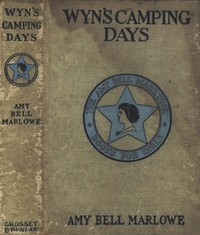
This digital edition of Wyn's Camping Days; Or, The Outing of the Go-Ahead Club — Inside the Classic is described by source-level measurements including 69,886 words, 5 hr 4 min estimated reading time, and 8 detected text sections.
The text analysis averages about 12.7 words per sentence, while the detected sections provide another way to judge how the source is divided.
Project Gutenberg metadata also associates the work with “Camping -- Juvenile fiction,” connecting these edition facts with the source record’s subject description.
Explore this collection
These alternatives are selected using recorded categories and estimated reading time.
About 304 minutes
Historical Psychological Social Fiction
69,886 recorded words. 0 minutes difference from this book's estimate.
View Gutenberg source #32731About 298 minutes
Historical Psychological Social Fiction
68,316 recorded words. 6 minutes difference from this book's estimate.
View Gutenberg source #27985About 293 minutes
Historical Psychological Social Fiction
67,217 recorded words. 11 minutes difference from this book's estimate.
View Gutenberg source #32225Search stored excerpts and compare books → Choose by your preferences →
Choices use stored catalog measurements. Estimates vary with reading speed. A shared category is a catalog label, not a claim that two books have the same argument or literary quality.
Search reads excerpt text stored with this catalog and links to its associated Gutenberg record. The connection is stored in the site database; this tool does not recheck that every excerpt is word-for-word identical to that external record. Excerpt search does not cover every chapter and does not verify historical publication dates.
Catalog snapshot checked: 2026-09-26. Coverage: 99 public books, 99 available source excerpts.
Calculated from edition completeness, EPUB availability, text structure and catalogue metadata. Not a user rating.
Total of 100 points, scaled to a 2.5-5.0 range. Editions with an empty description or a missing EPUB file are not scored.
Public-domain source text
The source text is kept in the dedicated reader, separate from this catalogue record and its commentary.
The novel opens with a bang—literally. Wynifred Mallory bursts through the door of Canoe Lodge, bringing a gust of May air that sends a balloon of smoke into the room and sets the Go-Ahead Club members coughing. This abrupt entrance establishes a pattern: scenes often begin with a sudden disruption, whether a storm, a false alarm, or an unexpected visitor. The smoke from the fireplace becomes a recurring image, signaling both the domestic comfort of the camp and the chaos that repeatedly intrudes upon it.
The narrative is built around a series of arrivals and departures. Each chapter tends to open with a character entering a space—Canoe Lodge, the camp at Green Knoll, or a lakeside clearing—and the action often hinges on who arrives next. The Go-Ahead Club's outings are punctuated by the sudden appearance of the rival Busters, whose pranks (like the bear-costume trick) force the girls to react. This structural rhythm creates a sense of constant motion, as if the story itself is always on the verge of being interrupted.
Marlowe uses these entrances to shift the balance of power. When Wyn and her friends steal the boys' canoes after the bear scare, the tables turn, and the girls seize control. The back-and-forth between the two groups drives much of the plot, with each side trying to outmaneuver the other. The chaperone, Mrs. Havel, often mediates these encounters, her calm presence contrasting with the girls' exuberance and the boys' mischief.
Fire appears repeatedly as both a practical necessity and a symbol of domestic order. In the opening scene, Grace Hedges struggles to light the fire, and Wyn's entrance creates a back-draught that finally gets it going. Later, at the camp, the girls manage a Dutch oven and worry about burning biscuits. The hearth is a focal point of the lodge, a place where the club gathers to plan and argue.
But fire also signals danger. The storm that breaks in Chapter VII threatens to extinguish the campfire, and the night alarm in Chapter XXIV suggests a more serious threat. Smoke, too, recurs: from the initial balloon of smoke to the haze of campfires, it blurs vision and creates uncertainty. These elements tie the domestic setting to the wild, reminding readers that comfort is fragile and nature is never fully tamed.
The story moves fluidly between interior and exterior spaces. Canoe Lodge is the club's home base, a place of planning and reflection, but the action quickly shifts to the lake, the woods, and the island. The girls' camping trip is the central event, and Marlowe describes the journey in detail: the packing, the storm, the arrival at Windmill Farm. Each new location brings new challenges—bears (or boys in bear suits), overturned canoes, and mysterious bateaux.
This movement is not just physical but emotional. The girls' confidence grows as they navigate the wilderness. Wyn, in particular, emerges as a leader, her quick thinking turning potential disasters into opportunities. The contrast between the controlled environment of the lodge and the unpredictable outdoors mirrors the club's own development from a social group into a capable team.
Mistaken identity is a central device. The most striking example is the bear scare, where the girls flee from what they believe are bears, only to discover the Busters in moth-eaten buffalo robes. Wyn's sharp observation—'They are not bears, walking on their hind legs; they are just boys'—reveals the truth and turns fear into a tactical advantage.
This pattern repeats in smaller ways. Characters misread situations: a shadow is mistaken for a threat, a sound is misinterpreted. The novel suggests that perception is unreliable, especially in the wild. The girls learn to question their first impressions, a lesson that serves them well when they encounter the 'strange bateau' and the 'sunken treasure.' The motif reinforces the theme of growth through experience, as the club members become more discerning and less easily fooled.
Readers may find it useful to track how each chapter begins and ends, noting the pattern of disruption and resolution. The novel rewards attention to small details—the smoke, the canoes, the buffalo robes—that recur and gain meaning. Marlowe's structure, built on entrances and exits, keeps the story moving briskly, while the recurring images anchor it in a vivid, tactile world. This is a book about learning to see clearly, both in the woods and in one's own assumptions.
I keep thinking about how Wyn’s story moves between the noise of home and the quiet of the woods, that shifting sense of who you are when no one’s watching. It reminded me of another old friend, where college halls feel just as wild as any forest. Molly Brown's College Friends — Reading Companion carries that same tender ache of finding yourself among others, and I’ve been carrying it with me since.
Save your reaction, strongest insight, and memorable passage.